


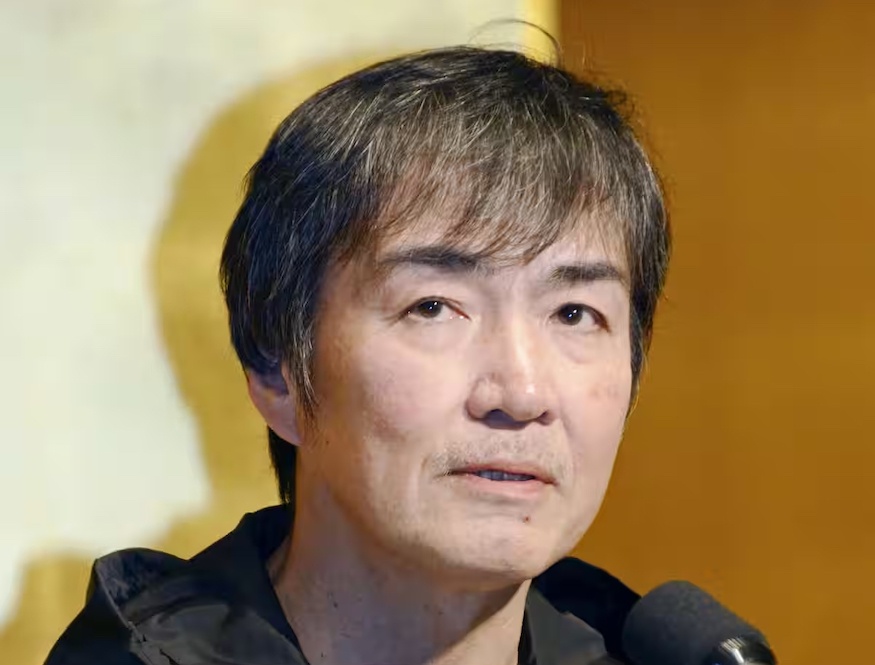
For readers of crime fiction, Keigo Higashino was much more than the bestselling author of The Devotion of Suspect X. He was a writer who transformed expectations of what a detective novel could be: a master of intricate plotting, psychological insight and devastating emotional revelations. His death at the age of 68 marks the loss of one of Japan’s greatest mystery writers and a figure whose influence extended far beyond his native country.
While Higashino had been a household name in Japan for decades, his arrival in English translation introduced us to a distinctive new voice in crime fiction and he became a favourite here at Crime Fiction Lover. He demonstrated that the traditional mystery could be reshaped into something more complex: not merely a search for the culprit but an examination of motive, morality and the fragile connections between people.
What made Higashino remarkable was his ability to take the familiar ingredients of detective fiction – a murder, a suspect, a hidden truth – and turn them on their head. In Malice, for example, the murderer is revealed almost immediately, leaving Detective Kyoichiro Kaga to answer the far more difficult questions of intention and deception. Higashino challenged readers to look beyond the mechanics of crime and towards the human stories beneath.
From engineer to novelist
Born in Osaka in 1958, Higashino did not begin his career in publishing. He studied electrical engineering and worked for an engineering company before dedicating himself to writing. His debut novel, After School, won the Edogawa Rampo Prize in 1985, one of Japan’s most prestigious awards for mystery fiction, immediately establishing him as a major new talent.
Over the next four decades he wrote prolifically, publishing dozens of novels, short story collections and essays. Yet productivity alone does not explain his extraordinary popularity. Higashino possessed the rare ability to satisfy dedicated mystery readers while attracting a much broader audience. His books sold in vast numbers in Japan, were adapted into films and television series, and inspired a level of public enthusiasm more commonly associated with literary celebrities than crime writers.
Reinventing the detective story
Western readers first encountered Higashino in significant numbers through translations published in the late 2000s and early 2010s. The Devotion of Suspect X won both the Naoki Prize and the Honkaku Mystery Award, and its success in English opened the door for a wave of further translations. For many readers, it was a revelation: a crime novel that combined the logical elegance of the classic puzzle mystery with the emotional force of literary fiction.
Higashino’s sensibility was unmistakably Japanese. His novels are attentive to social rituals, neighbourhood life, workplace hierarchies and the pressures of conformity. The violence is rarely sensationalised. Instead, its shock reverberates through families, friendships and communities. A murder in a Higashino novel is not simply an event; rather, it is a disturbance that exposes hidden fractures in ordinary lives.
The detectives who defined his career
Two recurring investigators became central to Higashino’s international reputation.
Detective Kyoichiro Kaga is a patient, empathetic detective whose greatest strength lies in understanding people. Kaga listens, observes and gently probes, often solving emotional mysteries alongside criminal ones.
By contrast, physicist Manabu Yukawa – known as Detective Galileo – approaches crime through intellect and scientific reasoning. The tension between logic and human feeling gives his investigations much of their impetus.
Together, Kaga and Galileo represent the two poles of Higashino’s fiction: compassionate insight and analytical brilliance.
A gateway to Japanese crime fiction
Higashino’s success in translation had consequences beyond his own career. He became, for many English-speaking readers, an entry point into Japanese crime fiction. Publishers who might once have regarded translated mysteries as a niche interest began looking more seriously at Japanese authors. Readers discovered that the genre could encompass locked-room puzzles, psychological suspense, social critique and literary experimentation without losing its essential attributes.
His translators — including Alexander O Smith and Giles Murray — deserve recognition for helping to carry that voice across languages. Their work preserved the precision, restraint and cultural texture that make Higashino’s fiction distinctive.
The enduring achievement
In recent years, Higashino showed no sign of slowing down. New translations continued to appear, and readers eagerly awaited each addition to the Kaga or Galileo series. Yet it is likely that his lasting reputation will rest not on any single detective or bestseller but on the cumulative achievement of a body of work that consistently respected the intelligence of its readers.
He reminded us that a mystery can be both ingenious and compassionate, that suspense can arise from emotional truth as much as from hidden clues and that, at its best, crime fiction is a way of investigating the human psyche.
Keigo Higashino leaves behind a remarkable literary legacy and millions of readers around the world. His novels will continue to challenge, move and surprise, and that is perhaps the finest memorial any crime writer could hope for.
Six recommended Keigo Higashino novels
Higashino had an extensive bibliography, but the following are among his best works to have been translated into English.
The Devotion of Suspect X (2012)
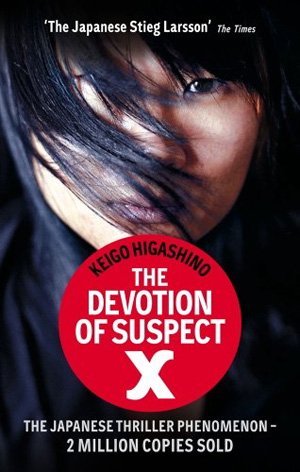
The Devotion of Suspect X, translated by Alexander O Smith, is a brilliantly constructed mystery that established Higashino as one of Japan’s finest contemporary crime writers. When a woman kills her abusive former husband, her neighbour Ishigami – a quiet mathematics genius – devises an ingenious plan to conceal the crime. However, his elaborate scheme is challenged by Detective Kusanagi and physicist Manabu Yukawa, who recognises the extraordinary intellect behind the deception. More than a traditional whodunnit, the novel transforms the familiar detective puzzle into a fascinating battle of wits, exploring obsession, sacrifice and the lengths people will go to for love. The tension comes not from discovering the culprit but from watching two brilliant intellects unravel an almost perfect crime. Smith’s translation preserves the novel’s precision and restraint, resulting in a gripping and emotionally complex thriller that is both intellectually satisfying and profoundly moving.
Order now on Amazon
Malice (2014)
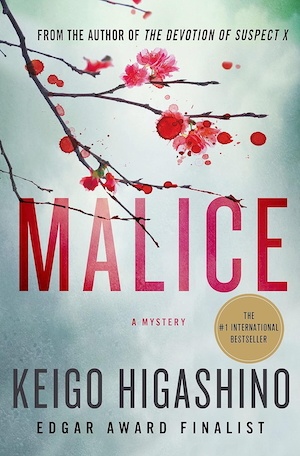
Rather than asking who committed the murder, Higashino reveals the culprit early and then builds a compelling mystery around how and why the crime was committed. Detective Kyoichiro Kaga’s thoughtful investigation delves into the complex relationship between victim and killer, exposing themes of jealousy, ambition, bullying and the hidden pressures of Japanese society. Echoing the shifting perspectives of the film Rashomon, the novel constantly challenges readers to question truth, memory and deception, while its metafictional focus on an author who constructs false narratives adds another layer of intrigue. Although originally published in 1996, and showing the occasional sign of its age, Malice remains remarkably fresh thanks to Alexander O Smith’s fluent translation, which preserves the distinctly Japanese atmosphere while making Higashino’s intricate plotting thoroughly engrossing for English-language readers. Read our full review here.
Order now on Amazon
Journey Under the Midnight Sun (2015)

Journey Under the Midnight Sun is an ambitious, sprawling crime novel that rewards patient readers. Beginning with the unsolved murder of a pawnshop owner in 1970s Osaka, the story unfolds over decades through a shifting cast of characters, gradually revealing hidden connections and long-buried secrets. Its episodic structure and intricate timeline can be challenging, particularly for readers unfamiliar with Japanese cultural references, but Higashino’s trademark misdirection ensures that crucial clues remain hidden in plain sight until the final revelations. More than a conventional mystery, the novel explores the lasting consequences of childhood trauma, guilt and obsession while painting a vivid portrait of modern Japan in transition. Alexander O Smith’s translation preserves the subtlety of Higashino’s storytelling, allowing the emotional depth and carefully layered plotting to shine. Demanding but immensely rewarding, it is one of Higashino’s most expansive and emotionally resonant works. Read our full review here.
Order now on Amazon
Newcomer (2018)
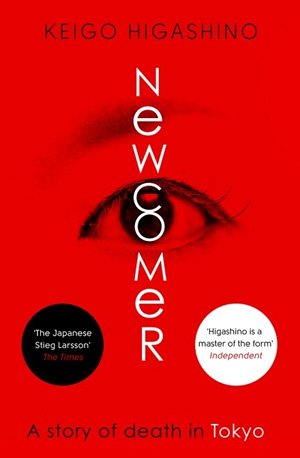
Newcomer, translated by Giles Murray, is a masterful mystery that showcases Higashino’s gift for finding extraordinary depth in everyday lives. Detective Kyoichiro Kaga investigates the murder of a recently divorced woman by patiently exploring the shops, cafés and homes of Tokyo’s Nihonbashi district, with each chapter unfolding as a self-contained vignette that gradually reveals the larger truth. Rather than relying on action or shocking twists, Higashino builds suspense through meticulous observation and richly drawn characters, creating a vivid portrait of a close-knit community. Kaga is a particularly memorable detective, combining sharp intellect with genuine empathy, allowing him to solve personal mysteries as well as the central crime. Murray’s elegant translation captures the novel’s understated charm and emotional nuance, while Higashino’s meticulous plotting ensures every detail matters. Read our full review here.
Order now on Amazon
A Death In Tokyo (2023)
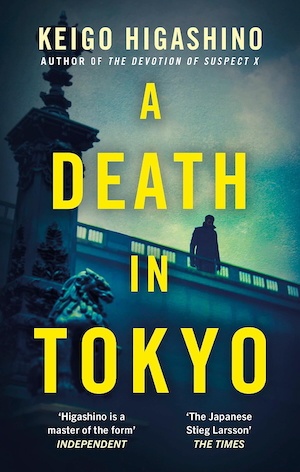
When a businessman is found stabbed beneath the famous Kirin statue on Tokyo’s Nihonbashi Bridge, the evidence appears to point towards a straightforward suspect, but Detective Kyoichiro Kaga quickly senses that the truth is far more complicated. As he investigates why the dying victim made the extraordinary effort to reach the bridge, he uncovers a story shaped by hidden resentments, family pressures and long-buried secrets. Higashino once again demonstrates his talent for transforming a carefully plotted murder into a thoughtful exploration of human motives and moral choices. Kaga’s patient approach places character at the heart of the investigation, while Giles Murray’s assured translation captures the novel’s subtle tension and emotional depth.
Order now on Amazon
Guilt (2026)
Guilt is a compelling exploration of justice, memory and the uneasy boundaries between innocence and culpability. When lawyer Kensuke Shiraishi is found murdered on a Tokyo riverbank, Detective Godai’s investigation appears straightforward when Tatsuro Kuraki confesses not only to that crime but also to a decades-old murder. Yet Godai refuses to accept such a convenient solution, and his pursuit of the truth uncovers a far more complex web of relationships, secrets and unresolved pain. Higashino excels at turning a seemingly simple mystery into a deeply human examination of the consequences of the past and the damage caused by false certainty. Giles Murray’s emotionally resonant translation makes it another outstanding addition to Higashino’s English-language catalogue.
Order now on Amazon
Click here to discover more Japanese crime fiction, and feel free to leave your own tribute to Keigo Higashino in the comments below.







A true loss.