

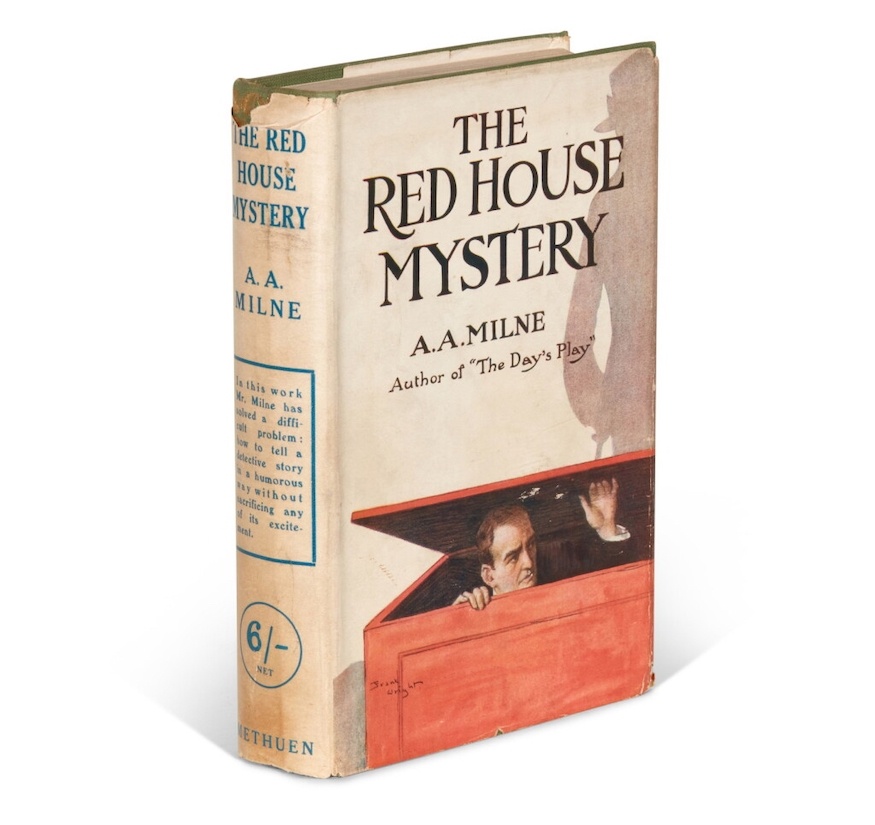
As the creator of Winnie the Pooh, AA Milne is associated with honey pots, heffalumps and bouncing tigers, not country house murders. In fact, today – 14 October 2026 – marks the centenary of the beloved bear’s arrival, which is very charming too, although it doesn’t concern us here at Crime Fiction Lover so much. However, before becoming synonymous with children’s literature, Milne had a varied literary career as a playwright, essayist and humourist, and among his early works is a single detour into crime fiction: The Red House Mystery, published in 1922.
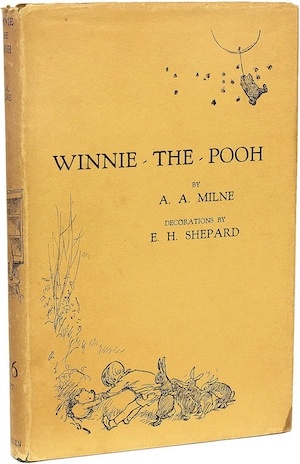
This lone mystery stands as both a loving tribute to and a sly parody of the classic English whodunnit. Published a year before Agatha Christie’s The Murder of Roger Ackroyd, it arrived at a moment when the detective story was crystallising into its Golden Age form – country houses, amateur sleuths, civilised intrigue and neatly solved puzzles.
Milne, with his background in light comedy and satire, approached the crime genre with affection rather than reverence, toying with its conventions while simultaneously embracing them. The result is a murder mystery that manages to be both engaging and subversive, neatly balancing puzzlement with amusement.
A murder in the study
The story begins in the quintessential setting: an English country house, the eponymous Red House, which is home to Mark Ablett, a prosperous bachelor known for his mild eccentricities and charming house parties. It is during one such genteel gathering that tragedy occurs.
The atmosphere of genial leisure is disturbed when Mark’s estranged brother, Robert, arrives unexpectedly from Australia. Within hours, Robert is found shot dead in the study, and Mark – the prime suspect – vanishes. The household is thrown into confusion, the servants whisper and speculation mounts among the guests.
Enter Antony Gillingham, a friend of houseguest Bill Beverley, who happens to arrive at the house just as the tragedy occurs. Intelligent, observant and possessed of both a cool detachment and a respectable bank balance, Antony steps easily into the role of amateur sleuth.
Antony and Bill team up to investigate the locked-room-style mystery, piecing together clues, testing theories and indulging in good-humoured banter as they pursue the truth behind the crime.
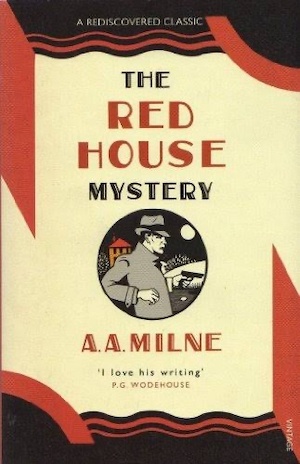
From the get-go, The Red House Mystery feels familiar, almost comfortingly so. Milne knows precisely what kind of story he is writing and assumes the reader does too. The conventions of the country house mystery – the isolated setting, the small cast of suspects, the emphasis on logic and deduction – are deployed with precision.
But Milne’s tone is lighter than most Golden Age works, more playful, as though winking at the reader from behind the curtain. The pleasure of the mystery lies not in sensational violence or moral darkness but in the unfolding of a well-designed puzzle in an atmosphere of bygone civility.
A matter of manners
The Red House Mystery is meticulously structured. Every detail – from a misplaced key to a suspicious letter – fits into a tidy pattern. Milne also designed the mystery to be fair: the clues are all there, although their meaning remains elusive until the final denouement. The book invites readers to match wits with the detective and, by extension, the author.
Yet Milne never lets the mechanics of the mystery overshadow its tone. His writing is brisk, unpretentious and enlivened by sly humour. He had an instinct for rhythm and dialogue, and much of the story’s charm lies in the interplay between Antony and Bill. Their exchanges form the novel’s emotional centre yet are full of teasing, jokes and sudden bursts of insight.
Where other mysteries of the period can sometimes seem stiff or procedural, The Red House Mystery feels almost companionable. Reading it is rather like spending the weekend with two witty friends who happen to be investigating a murder between rounds of golf and turns amusing an elderly aunt.
This lightness of touch extends to Milne’s treatment of the crime genre. He clearly enjoys the trappings of detective fiction – the locked room, the missing host, the trail of clues – but he also acknowledges their absurdities. Antony occasionally comments on the ‘rules’ of such stories or the clichés of fictional detectives, and Milne invites readers to share the joke.
Class, order and the English
Beneath the polished surface of The Red House Mystery runs a subtle commentary on English manners and class. The story unfolds within the insulated world of upper-middle-class leisure, where servants are deferential, guests are polite and appearances must be maintained, even in the face of murder. The crime disturbs not only a life but a social order.
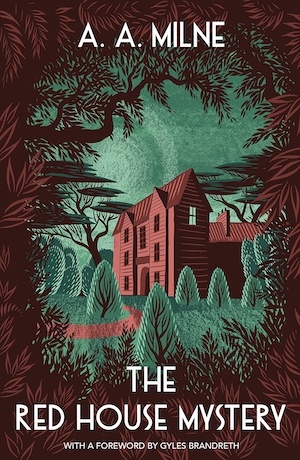
Milne, with his wry humour, captures the quiet absurdity of this milieu. The guests fret about propriety as much as guilt, tea continues to be served and the detectives’ inquiries are conducted with scrupulous politeness. The servants remain on the periphery – witnesses and keepers of secrets that the ‘upstairs’ characters only half acknowledge.
The author does not moralise, but the class boundaries are unmistakable. The Red House setting becomes a miniature England, with its sense of decorum stretched to the limit by the intrusion of chaos via an ill-timed murder.
This tension – between comfort and disruption, order and transgression – is a key reason why the novel continues to resonate. The murder is less important than the way the household reacts to it. The Red House Mystery is as much a comedy of manners as a crime story, with its genteel absurdities reflecting a culture obsessed with restraint and civility.
A product of its time and a gentle rebellion
When The Red House Mystery was published in 1922, detective fiction was on the cusp of transformation, moving from the lurid melodramas of the 19th century towards something more cerebral and self-contained.
In just a few years, writers such as Agatha Christie, Dorothy L Sayers and Margery Allingham would define the Golden Age with their intricate plotting, archetypal characters and moral clarity. Milne’s novel anticipates much of what was to come but also feels curiously apart from it.
For one thing, Milne’s interest is less in justice than in amusement. Antony Gillingham is not a professional detective – he has no desire for fame or payment. He investigates the crime because the puzzle intrigues him. There is no emotional urgency or lingering grief for the victim. The tone remains urbane, detached, almost whimsical.
Critics have faulted the book for this detachment – for its lack of emotional depth, its genteel pacing and its thinly drawn characters. In The Simple Art of Murder, Raymond Chandler, singled out The Red House Mystery (warning: thar be spoilers) as an example of the artificial English puzzle mystery, declaring that it only exists ‘for the diversion of genteel ladies’.
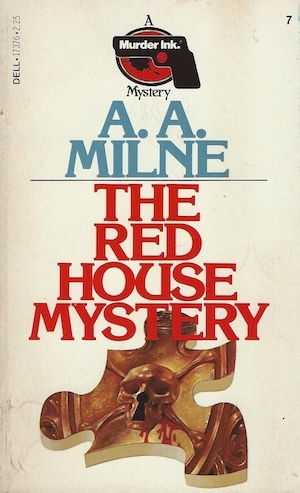
While fair, this critique misses Milne’s intent. He was not trying to portray psychological realism or social decay; he was consciously writing an entertaining story in a theatrical mode. The artificiality is part of the pleasure of reading.
In essence, The Red House Mystery serves as a bridge between traditions. It retains the decorum of the Victorian mystery – the puzzle as a parlour game – while hinting at the more ironic, self-referential tone that would later dominate British detective fiction. Milne loved the form enough to honour it, but he saw it clearly enough to laugh at it too.
The legacy of a one-off
It is curious that Milne never returned to detective fiction (beyond Four Days Wonder). The Red House Mystery was published to warm reviews and strong sales, and it even appeared on early lists of ‘must read’ mysteries. But Milne’s life changed dramatically soon after, when the stories of Christopher Robin and his bear became a worldwide phenomenon.
He later expressed irritation that his adult works were overshadowed by his children’s books. Yet The Red House Mystery gains a certain poignancy from that context. It shows the same precision of language, the same gentle humour, the same fascination with friendship and imagination that characterise the world of Pooh. Only the setting and the stakes are different.
Today, the novel seems like a time capsule of 1920s England: a society between wars, clinging to tradition while modernity looms. It endures not because it shocks or terrifies but because it reassures. It reflects a time when crime fiction could be elegant, witty and bloodless – a game played between equals rather than a descent into darkness.
Order a copy of The Red House Mystery with our buttons below.