

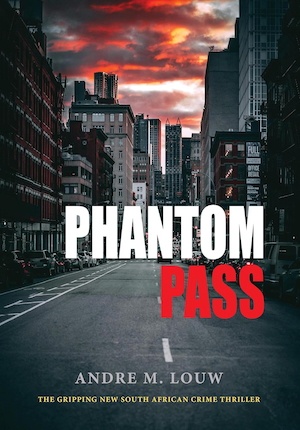
South African author André M Louw makes a notable entrance to the crime genre with a debut that balances fully fleshed-out characters with a breakneck pace.
The story commences with the discovery of Mark Whitcombe, a prominent 67-year-old retired lawyer whose mutilated corpse is found in a small boat on the Knysna estuary in the Western Cape. Tasked with investigating is Captain Josh Holland, a rookie detective with a legal background, who finds himself mentored by Colonel Gavin Whitall, a veteran of the South African Police Service’s Serious Crimes Unit from the town of George.
The investigation draws links to Reghardt Brink, a disgraced former security police commander convicted for his role in the 1986 assassination of an ANC leader in Mozambique. Whitcombe had previously served as Brink’s defense counsel during an unsuccessful appeal, and a tense meeting between the two men occurred shortly before his murder.
However, Whitcombe’s personal life reveals that there might be other motives. His wife, Veronica, mentions that he was working on his memoirs – could revelations made there have endangered his life? He was also involved in the Phantom Pass Environmental Project, a controversial development aimed at establishing a tourist hub within a forest area historically significant to the Khoisan people. As public and media pressure increases, the detectives are drawn into a dangerous underworld of narcotics and violence.
Holland is one of the oldest trainee detectives in the country, having transferred to George after two years in the seediest and most dangerous parts of the Cape Flats. Unlike Deon Meyer’s Bennie Griessel, Holland does not have a broken marriage or an alcohol problem. On the contrary, he’s in a happy relationship. Colonel Gavin Whitall is a legendary homicide detective and former operative of the Scorpions, an elite police unit established to combat organised crime and systemic corruption.
Other characters include Solly and Clint, a farcical Abbott and Costello-like duo. There is also Ricardo ‘AppleMac’ Jantjies, the tech expert; Christiaanse, a weasel-faced policeman who favours gang-style clothing; and Jerome ‘Masekind’ Erasmus, who is a real gangster. To balance all this testosterone, there’s Erna Pretorius, a disabled detective who doesn’t mince her words.
Inextricably linked to their surroundings, these characters speak with a distinct local dialect that authentically reflects the region’s culture. Louw avoids using fictionalised names for real-world figures in South Africa – he is a lawyer so perhaps has used his legal expertise to navigate the risk.
The setting is mainly the towns of Knysna and George, including the Joodse Kamp informal settlement. This area is home to drug gangs like the Funky Guys, who are suspected of manufacturing methamphetamines, known locally as ‘tik’. It feels realistic and convincing, referencing real people and notorious gangsters such as Rashaad Staggie. For a South African, there is a sense of comfort in reading a novel set in a familiar environment described with such accuracy.
The doesn’t shy from strong language or the depiction of brutality, such as his description of the body on the estuary. The narrative features observant humour that adds personality to the characters and captures the weary wit of people under pressure. Louw’s avoids superfluous detail with a precise and meticulous style that keeps the focus on the investigation. The author’s legal background is evident, lending the text an authoritative quality that reflects significant research.
Phantom Pass explores the intricate process of solving a murder while navigating the South African reality of policing where the sheer volume of crime tests the limits of the authorities. There is a clear focus on the frustration with red tape, bureaucracy and internal politics, including delays in post mortem results.
The only downside to Phantom Pass is that it ends with some loose threads, requiring the reader to pick up the second novel for a resolution. Splitting the original manuscript into two parts is a brave move that may be worth the risk. Fortunately, you won’t have to wait too long for Chasing Ghosts, the second part, which is out later in 2026.
Louw’s writing brings a distinct and fresh new voice to South African crime fiction – a most welcome and highly recommended addition.
Also see Red Tide by Irma Venter.
Catalyst Press
Print/Kindle
£13.65
CFL Rating: 5 Stars