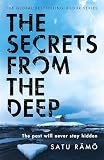


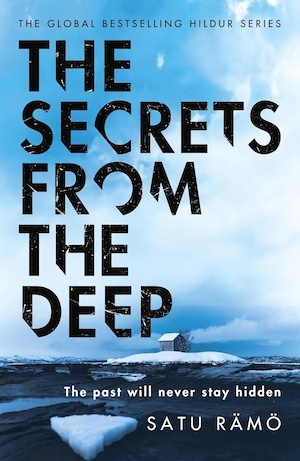
Translated by Kristian London — Finnish-born writer Satu Rämö has lived in Iceland for 20 years and won the 2025 Petrona Award for The Clues in the Fjord, the debut in her Hildur series. In the fourth of the series, she returns with a dark police procedural set in the remote Westfjords that focuses on social issues, cultural change, and deep-rooted personal trauma. We reviewed the third novel in the series, The Shadow of the Northern Lights, late last year.
The plot moves between 2022 and a 1995 backstory about Rakel, the mother of the main character, Detective Hildur Runarsdottir. Previous novels have dealt with the death of Hildur’s parents in a car accident and each instalment in the series reveals more about the circumstances surrounding their deaths, her sisters’ mysterious disappearance and her father’s abuse.
In the present timeline, the small town of Ísafjörður has been quiet for months until two shocking events occur. First, an enormous cruise ship called the Diamond Adventure of the Seas comes in to dock. A young Venezuelan kitchen worker stumbles off the ship covered in blood, his face scarred. Terrified, he refuses to reveal what happened to him.
Meanwhile, workers digging to install a septic tank at Kotsdalur, Hildur’s childhood home, discover human bones. Hildur is forced to investigate and solve the mystery of the bodies in her old backyard which brings her to the possibility that her late father could have been involved in their deaths.
Hildur is a complicated, tough detective who avoids dealing with emotions. She compares feelings to cream – when you whip it too much, it turns into butter. She enjoys her independence, not having to answer to anyone and being able to go where she wants, like going on surf trips in Brenda, her trusty old Toyota Land Cruiser. Nonetheless, she’s in a casual long-distance relationship with Anton, a Finnish reindeer herder and friend of her police partner, Jakob. She’s fond of Anton and this makes her consider whether she’s ready for something more permanent.
Hildur’s difficult relationship with her two sisters, Rósa and Björk, who have only recently been found after being missing for years, is a main focus. Rósa has a new, steady job at a phone company after years of earning money by illegally collecting mare’s blood. Björk, the youngest sister, is in prison for assault, but Hildur is convinced she’s innocent. All three sisters are damaged by their past experiences, but Hildur tries to make up for years of separation and estrangement.
Hildur’s police partner and obsessive sweater knitter, junior constable Jakob Johanson, features less prominently than he did in The Shadow of the Northern Lights. This time around he’s taken on more of a supportive role. Before joining the police, Jakob worked as a biologist, so his insights are handy when the skeletons are found. Jakob lives next door to Hildur and tries to balance his studies with family life with his young son, Matias, and partner, Gudrún. His current situation contrasts with the past five years when he was embroiled in a nasty divorce and not allowed to see his son. His stability is interrupted when his wealthy parents, who neglected him as a child, want to get back into his life for their grandson’s sake.
Two aspects highlight the changes happening in Iceland and their impact. The novel comments on the fishing quota system, explaining how corporations acquired a large portion of the country’s fishing fleet, turning public assets into private property. This led to local residents losing their jobs and small towns like Ísafjörður emptying since its inhabitants had to find work elsewhere. This is a trend common to fishing communities across the world.
To survive, small towns are forced to rely on tourism for income instead. For example, Ísafjörður had to dredge its harbour to accommodate massive cruise ships. Rämö links this economic shift to the exploitation of foreign labourers who face shocking working conditions, irregular pay and human trafficking on construction sites and ships.
Rämö balances multiple plot threads with clear, engaging writing. The characters are convincing and well-developed, showing genuine growth throughout the series. As with its predecessors, the storyline is original and interesting enough to keep readers intrigued from start to finish. This series arrives when the Nordic noir subgenre needs a lift, and one can only hope that other authors follow suit.
For more crime fiction set in Iceland with a strong female protagonist, try the Stella Blomkvist series.
Zaffre
Print/Kindle/iBook
£9.49
CFL Rating: 5 Stars