


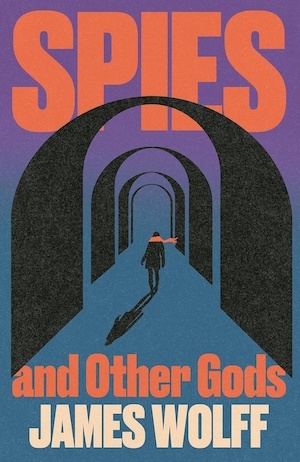
Recent years have seen a renaissance of fiction set in the murky world of espionage. No doubt the continued success of Mick Herron, both in print and on Apple TV, has played no small part in this. David McCloskey’s series of action-packed thrillers regularly hits the bestseller lists, there’s IS Berry and most recently Paul Warner. Meanwhile James Wolff, a writer with real life experience of the secret world, has quietly written the well-received thrillers Beside the Syrian Sea, How To Betray Your Country and The Man in The Corduroy Suit, which have a more literary feel. This latest novel, with a larger publisher, might be the one to propel him into the mainstream.
Spies like secrets, I think that’s well established. They like finding them, they like trading them, and they like keeping them. It’s this last habit that is the starting point of the novel. Under duress from Parliament, Sir William Rentoul, outgoing head of MI6, agreed for a whistle blowing protocol to be set up for the service. The Intelligence and Security Committee has now received an anonymous complaint about an ongoing operation and insist it is investigated. To this end, Rentoul is to provide every assistance to the designate investigator, Aphra McQueen, a parliamentary researcher.
For Remtoul and his staff, this means frustrating and confusing her as much as possible while giving the appearance of helping. McQueen is provided an escort who dogs her every step, interviews are scheduled without allowing her time to prepare for them, and any answers are reassuring yet vague.
The operation is an especially sensitive one since it involves cooperation with other European agencies. An Iranian assassin has been executing critics of the regime on European soil, and the British think they know his identity. Contacts have been made in the ex-pat community, and a nephew of the assassin, living in Paris, has been recruited by the service to provide further information on their suspect. All this has been done without the knowledge of the partner organisations, but MI6 plans to capture him the next time he visits Europe.
A successful resolution of the operation would be a fine ending for Rentoul to bow out on, and go a long way to ensuring his successor enjoys a good working relationship with his allies. Should the other intelligence agencies get word of a British operation taking place on foreign soil without the necessary permissions and disclosures in place, that would be very bad. McQueen, as far as the service is concerned, is not just a nuisance, but a security risk.
Once its known that McQueen will not tolerate the obfuscation, she is fitted up. A file is planted in her bag – maybe with Rentoul’s knowledge, maybe not, but certainly with his approval – and she is escorted out in disgrace. Of course, that’s not the end of matters, merely the beginning. Whatever her motives, and we don’t discover them until the very end, McQueen has no intention of giving up. Following her own leads from the case file, she travels first to Birmingham, then Paris and finally Lausanne, Switzerland. As the services grow increasingly desperate watching her progress, operatives, including Sir William Rentoul himself, are dispatched to intervene.
The first part of the novel, with McQueen at service headquarters, has a Kafkaesque quality to it. Everybody is in the dark, and paranoia runs amok. Wolff exploits the situation for comic effect, and for a while it does feel as if you could be reading a Slough House novel, albeit with a different cast and gentler humour compared to Herron’s often uproarious laugh out loud style.
The incompetence of MI6 does provide a crucial plot point, but ultimately Wolff chooses a different path. Through careful character development, the author explores themes of family connection, loyalty, accountability and conflicting personal and professional responsibilities. The drama is accordingly understated, which might disappoint some readers, but I found it satisfying. The ending is ambiguous, deliberately so I’m sure, and depending on your reading, could change the novel’s meaning.
Spies and Other Gods might not feel as commercially written as some other recent espionage series, but it is a worthy addition to the genre, and deserves just as wide an audience.
Read our 2023 interview with James Wolff here.
Baskerville
Print/Kindle
£11.99
CFL Rating: 4 Stars





His three previous books about spies following their own agenda were highly entertaining, and this one sounds like a worthy successor!