

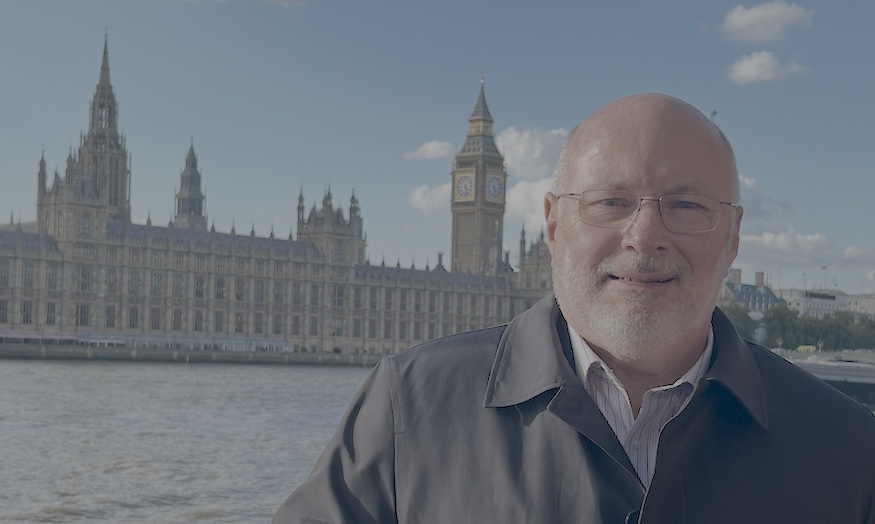
Authenticity is such an important quality in a police procedural crime novel. It’s an elusive quality in writing, too. As readers, we want to be captivated by the world the author gives us through the language they use, and to believe in it. This is what debut crime author Neville Blackwood has focused on in Covert – a novel based on the authentic experience of working as an undercover cop in 1990s London.
Out on 25 August 2026, the book tells the tale of DS Mark Carter as he joins a police unit aiming to bring down drugs baron Freddie Morgan. A former police detective himself, Neville has written the book driven by a passion to show people the hidden side of policing. He wants us to experience what it’s really like to work a high stakes, high risk operation and he’s set Covert during an era when the police had far less technology at their disposal.
This is a far cry from the Devon farm where Neville grew up, before joining the police in 1982. During his career he worked in Thames Valley, the City of London Police, the Metropolitan and Surrey Police. He went on to become a detective superintendent advising the Foreign, Commonwealth and Development Office, helping police and security services over 50 countries as diverse as The Maldives, Iraq, Somalia and the Balkan states. To add to all that lived experience, he has a degree in English Literature from the University of Reading.
We’ve invited Neville to join us here on Crime Fiction Lover to find out more about Covert, and how he’s infused the novel with from his time pursuing hardened criminals.
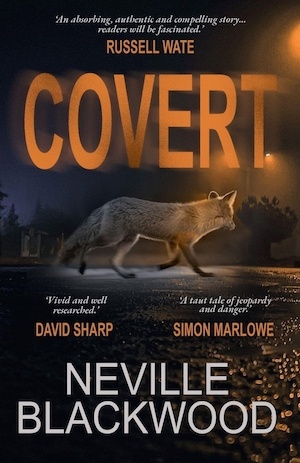
I don’t usually ask this, but I love the cover, so what was the thinking behind it?
The cover represents a pivotal scene in the novel. During a covert surveillance operation on a safe house in Clapham, the quiet movements of the undercover team disturb an urban fox in the middle of the night.
I loved the symbolism. A fox is intelligent, cautious and elusive – qualities shared by both detectives and criminals operating in the shadows. Rather than another silhouette against a city skyline, the fox captures the stealth, tension and uncertainty of London’s undercover world.
Looking inside the book, what are crime fiction lovers going to love about Covert?
I hope readers are swept along by the pace of the story. It’s full of twists, tension, surveillance, informants, organised crime and the constant uncertainty of who can really be trusted.
However, at its heart Covert is about people. It is about loyalty, deception, courage and betrayal, where the line between good and evil isn’t always as clear as it first appears. I wanted it to feel like readers were experiencing a real investigation rather than simply watching one unfold.
Who is DS Mark Carter? What inspired him and how have you developed the character?
Mark Carter draws heavily on my own experiences as a detective sergeant working on highly specialised covert investigations targeting some of London’s most dangerous organised crime groups. He’s not me, but he shares many of the pressures, dilemmas and responsibilities I experienced.
I wanted him to be believable rather than superhuman. He makes difficult decisions, questions himself, relies on his colleagues and understands that one mistake in the undercover world can have devastating consequences.
What’s he up against in Covert?
Mark finds himself investigating a ruthless organised crime network responsible for importing large quantities of drugs into London. As the operation develops, trusted informants become increasingly vulnerable, loyalties are tested and there are growing suspicions that corruption may exist far closer to home than anyone expected.
The deeper the investigation goes, the harder it becomes to distinguish friend from foe. The greatest danger isn’t always coming from the criminals.
What’s it like working an undercover sting?
Working undercover is unlike any other area of policing. It demands absolute trust within the team because every operation carries genuine risk. Decisions have to be made quickly, often with incomplete information, while everyone knows that one mistake can put lives in danger.
One aspect I particularly wanted to capture was the camaraderie. Investigators, surveillance officers, handlers and informants become incredibly close because they’re relying on one another every single day. Informants often put their own lives on the line to help bring dangerous criminals to justice, and those relationships can become unexpectedly strong. I wanted readers to understand the humanity behind the operation as much as the excitement.
Likewise you’ve brought down some hardened criminals. How much of them has fed into your antagonist, Freddie Morgan?
Freddie Morgan is a composite character inspired by a number of organised crime figures I encountered during my career. Rather than basing him on one individual, I borrowed characteristics, behaviours and personalities from several people.The result is someone who is nobody’s fool; manipulative and genuinely threatening, but also recognisably human. I think the most dangerous villains aren’t cartoon monsters, rather they are believable people capable of charm, loyalty and even affection alongside ruthless violence.
1990s London is your setting. How is it different from the London of today and how have you captured the atmosphere of that era?
The London I knew in the 1990s felt grittier, less polished and in many respects more unpredictable. Organised crime was thriving, violent crime was a significant challenge and investigations relied far more on surveillance, informants, painstaking detective work and instinct than technology.
Today investigators have mobile phone data, social media, ANPR, CCTV networks, digital forensics and, increasingly, artificial intelligence. In the 1990s we had far fewer technological advantages, so success often depended on patience, teamwork and human judgement. That gave investigations a very different atmosphere, which I wanted readers to experience.
How authentic is Covert to the procedures you followed as a senior detective, and how much have you given yourself license to thrill the reader?
The investigative procedures, operational mindset and team dynamics are rooted firmly in my own experience. Many of the incidents are inspired by real events, although they’ve been combined, adapted and fictionalised into an entirely original story. As the saying goes, fact is often stranger than fiction.
In reality, the investigations I worked on were already incredibly exciting. I genuinely couldn’t wait to start work each morning because you never knew what developments the day would bring. While technology has transformed policing since the 1990s, the one thing that hasn’t changed is the human element where people still lie, deceive, manipulate, take risks and make mistakes. That’s what drives Covert.
Which other crime books / authors have influenced you?
Arthur Conan Doyle first sparked my fascination with detective fiction and I have always admired the way Sherlock Holmes solves problems through careful observation and logical deduction. More recently I have enjoyed writers such as Peter James, whose procedural detail and believable investigations resonate with me.
I am currently reading I Am Pilgrim by Terry Hayes. It’s a terrific example of a thriller that combines intelligence, pace and meticulous research while keeping readers constantly guessing.
What’s next for Neville Blackwood, and what’s next for DS Mark Carter?
I’m not ruling out bringing Mark Carter back because I think there are still stories to tell from that era. The undercover world offers endless possibilities, and readers may not have seen the last of him.
I have also completed my second novel, which moves into a very different setting inspired by my international policing work. This time the story takes place in Jamaica, where investigators are confronted with a series of murders against the backdrop of organised crime, corruption and the unique challenges of policing overseas.
Covert is released on 25 August 2026 and you can grab a copy using our Amazon buttons below. Also see Neville Blackwood’s author website here.