

Human remains are discovered in an abandoned engine house outside a small Cornish town, sending locals and internet sleuths aflutter. When rumours as to the identity of the deceased begin to spread, there’s shock, disbelief and an overwhelming desire to crack the case before the police have a chance to screw it up.
However, the person most shocked, disbelieving and desirous of avoiding police involvement is Eloise Ford, especially when she learns that the remains are suspected to be those of teenage runaway Elizabeth King, who has been missing for around 30 years.
A self-styled small fish in a small pond, Eloise is an art gallery owner, a yoga afficionado, a loyal friend, a dedicated wife and an overbearing mother, and she still manages to be well liked in the local community. But Eloise also has a major secret – she’s not Eloise at all.
In fact, Eloise is actually Elizabeth King, which is how she knows that the newly discovered remains have been misidentified. She absconded from her home in Nottingham – for reasons she’s not willing to think about – nearly three decades ago and has built a new life for herself, one she’s not willing to lose.
Far more enthusiastic about the discovery of the body is Holly Bond, the on-again, off-again girlfriend of Eloise’s teenage son. Holly’s older sister is also missing and she is an enthusiastic member of online crime-solving communities. When she learns that Elizabeth King has apparently been found, Holly’s determined help find justice for the murdered girl.
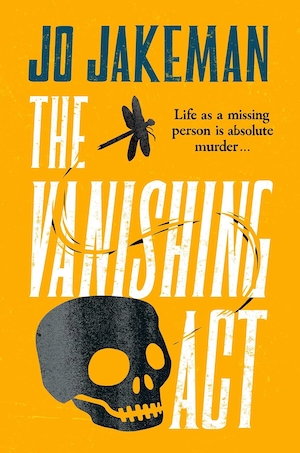
The Vanishing Act by Jo Jakeman is a psychological thriller that blends suspense, domestic drama and social commentary into an intriguing and immersive mystery. The inherent tension between history and modernity renders Cornwall a fitting setting for a story about reinvention, deception and the fragile nature of identity.
Jakeman’s tense and atmospheric narrative balances Eloise’s internal turmoil with the mounting external pressure she faces. Her micromanaged life – her loving family, her sufficiently successful art career and her familiar rural existence – is suddenly threatened. She knows that Elizabeth King has not been found, and she wants that to remain the case.
At the same time, the sudden shock of a corpse being found forces Eloise to confront the fact that her prefect world was maybe not quite perfect after all. Her husband is showing signs of infidelity, her children won’t answer her calls and someone seems to be watching her, which all ratchet up the suspense gradually but inexorably.
Whether due to panic or fear, Eloise spares little thought for the young woman who has been killed, focusing on the hope that Elizabeth King will quickly disappear from the headlines rather than on the fact that the misidentification may prevent a murder from being solved. Given her resolve and resourcefulness, she really should have taken action to address both these issues.
Similarly, despite the tension and anxiety she has apparently been feeling for years, Eloise seems to have been remarkably reticent about the disappearance of Elizabeth King. She does not seem to have kept track of what is known, what is suspected and what is being done. She does not seem to have googled her former identity at all. Knowing her state of mind, this reticence seems discordant.
Fortunately, Holly and her fellow members of the Truth Seekers forum are far more on the ball. While they seemingly fail to investigate some key aspects of the Elizabeth King case, they do sincerely care about the woman who has been killed and the outcomes of other missing persons, and the internet sleuths also bring some welcome fun and levity to the story.
Eloise may have the most obvious identity issues, but it is Holly who has the most shaky sense of self. Having left school without qualifications, failed to secure employment and broken up with her boyfriend, she doesn’t know what either the present or the future holds for her. This is one of the major reasons for her dedication to identifying the killer.
The second major reason is the disappearance of her older sister, which other characters seem decidedly unbothered about. This lack of interest is peculiar, particularly after Holly and Eloise start collaborating. Still, it provides sound motivation for Holly’s crime-fighting vigour, her numbness to life and her slight detachment from reality.
Both Holly and Eloise make various mistakes during their uneasy partnership, and neither is all hero or all villain. This dichotomy is reflected in the mysteries they have to solve, ranging from who the dead woman is and who killed her, to who started the rumour that Elizabeth King has been found, to what led to Eloise’s disappearance and where has Holly’s sister gone.
Despite these uncertainties and moral ambiguities, Jakeman manages to leverage the gallows humour of psychological suspense, using wit to puncture moments of tension without undercutting their seriousness. She is particularly skilled at skewering the follies of class and privilege in rural England.
The pacing of the story is spot on, with sidebars such as news reports, internet posts, suspicious phone calls and local gossip keeping the mystery alive and planting tantalising clues for Elosie and Holly. There’s a lot going on in The Vanishing Act, which means there’s much for Eloise to confront if she is to regain control over her life.
Also see The Dead Friend Project by Joanna Wallace and The Stranger in Room Six by Jane Corry.
Constable
Print/Kindle
£12.99
CFL Rating: 4 Stars