

Here at Crime Fiction Lover, we’re proud to have got in at the ground floor when Mick Herron began his Slough House novels. As time has gone on, the books have gone from strength to strength – the author was truly a fresh voice, a disruptor, even, in spy fiction. And we were delighted when the books were adapted for television by Apple TV.
Season six of Slow Horses is arriving around the time we’re posting this article and we’re ready to devour it. We’ve read all the books too… So where next?
We figured readers would be wondering the same thing, so our contributors Erin Britton, Rough Justice, Chris Connor and Paul Burke have collaborated to identify a list of wonderful espionage series that share various characteristics with Slow Horses, while at the same time bringing something original to the genre.
Why the Slough House novels work so well
Mick Herron’s series turns the traditional spy thriller on its head. Instead of following the service’s brightest stars, its heroes are the outcasts: agents who have failed, fallen from favour, made the wrong enemies or simply become inconvenient to the people at the top. Exiled to Slough House, they are supposed to spend their days doing pointless paperwork and waiting for their careers to quietly die. Naturally, things rarely work out that way.
There is something very satisfying about watching characters who have been written off being given the opportunity to prove everyone wrong. They may be unlucky, irritable, damaged or spectacularly ill-suited to conventional espionage, but they are also resourceful and, crucially, recognisably human. We can all imagine getting something wrong, being underestimated or finding ourselves on the wrong rung of an office hierarchy. Seeing Herron’s misfits triumph against the odds is considerably more entertaining than watching another impossibly polished superspy save the world.
But that doesn’t mean the Slow Horses novels skimp on the serious business of espionage. Herron has created a contemporary spy setup that reflects the world around it, incorporating changing technology, international tensions, terrorism, political manoeuvring, media narratives, institutional secrecy and the uneasy relationship between the government and its employees. Tradecraft remains an important part of things, lending authenticity even when Herron is more interested in the people than the gadgets.
And then there is the humour. Herron’s dialogue is sardonic and often gloriously cruel, with the darkest moments frequently accompanied by a perfectly judged comic observation. The inhabitants of Slough House are surrounded by schemers, bureaucrats, incompetents and outright villains, but few characters are simply what they initially appear to be. Even Jackson Lamb, the Slow Horses’ magnificently unpleasant boss, is more complicated than his appalling manners and lack of personal hygiene might suggest. Beneath the insults, laziness and apparent indifference lies a huge amount of competence and a fierce loyalty to his people.
The result is spy fiction with both teeth and personality. Herron draws on the tradition of writers such as John le Carré, Graham Greene, Eric Ambler and Len Deighton, although he gives the genre a distinctly modern twist and populates it with characters who are as flawed as the institutions they inhabit. The Slow Horses may have been cast out of the establishment, but they are there when it matters. The combination of underdogs, sharp plotting, contemporary espionage, dark humour and unforgettable characters explains why Slough House has become such an irresistible place to visit. You can read a full guide of the Slough House series here.
The novels we’ve listed below don’t try to replicate Mick Herron’s recipe, but they do share similarities and provide other perspectives on espionage, which only serve to enrich the genre. We think that if you love Slow Horses and the Slough House books, you’ll love these too…
The Artemis Procter series by David McCloskey
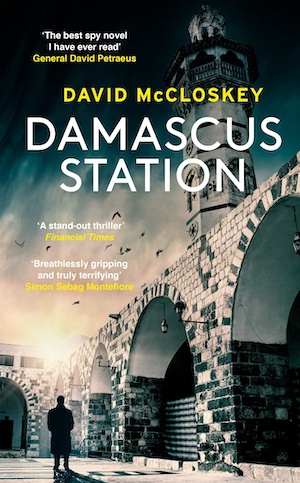
A compelling spy is at the heart of any good espionage story. Much like Herron’s Jackson Lamb, a figure who doesn’t always play by the rules and has created a domain of his own, David McCloskey’s Artemis Procter takes a situation as she finds it and certainly is not one to mince her words or to necessarily follow instructions to the letter. While the novels Procter appears in aren’t as linked as most series, in The Seventh Floor she is more of an out-and-out lead as she investigates a mole in the CIA. Procter returns in the much anticipated London Station in October 2026, which will see her butt heads with her British equivalents. Sparks are surely set to fly.
Start with Damascus Station
The Gabriel Dax trilogy by William Boyd
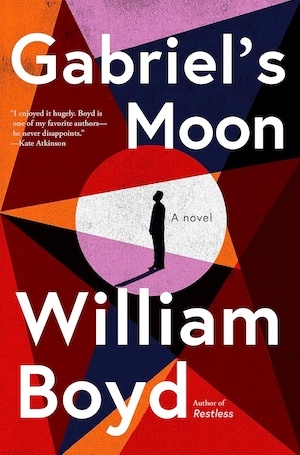
William Boyd’s Gabriel Dax novels showcase an outsider spy in the shape of the titular travel writer. There is a bumblingness from Dax and those he encounters that doesn’t feel a world apart from Herron’s work although the Cold War setting means this plays with more traditional spycraft leaning into the Eric Ambler and John Buchan playbook of the everyday man drawn into the world of espionage. Dax’s blind luck and heavy handedness often come to the rescue, sp perhaps he wouldn’t feel totally out of place among the slow horses. Neither the British or Russian intelligence services seem as refined as in other works leading to a uniquely grey world.
Start with Gabriel’s Moon
The Jamie Tulloch novels by David Goodman
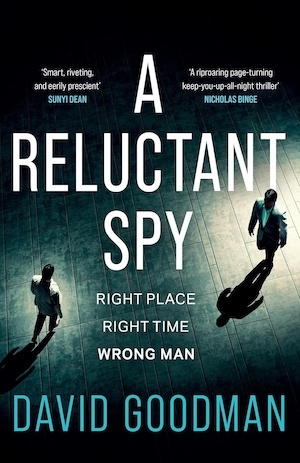
The Legends programme introduced in A Reluctant Spy sees everyday folk trade their identities for use by British Intelligence. Of course things don’t go to plan, with Jamie Tulloch forced to take on the role of secret agent much against his will. It feels very Mick Herron-like with the failings of the system and people (Jamie specifically) increasingly out of their depth in the frenetic world of high tech, modern espionage. There is plenty of humour, making light of the situation with David Goodman proving that he has a grip on how to weave comedy into the most tense of situations, something Herron has proven a master of with the Slough House series.
Start with A Reluctant Spy
The Felicity Jardine novels by Mark Ezra
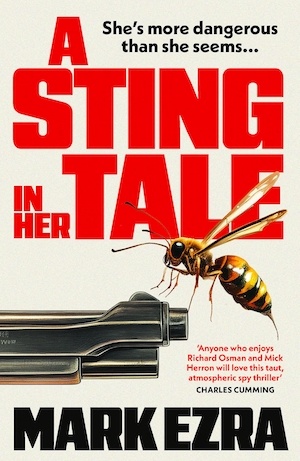
Retired MI6 agent Felicity Jardine feels so dejected at the beginning of this series that she is on the way to the river to drown herself. There, she saves a baby, apparently abandoned, and with a stranger seemingly watching on. The sense of achievement and responsibility engendered gives her something to live for. Inevitably, there is more to the scenario than first appears and Felicity has to call on all of her professional skills to return the baby safely to her mother and keep herself safe in the bargain. Like Slow Horses there is a quintessential Englishness to the stories in this series, with a similar theme too in that our heroine has been deemed obsolete. She’s a spikey character with a habit for speaking her mind, and there’s humour – not as ribald as Jackson Lamb’s but you get the idea. There have been two books in the series so far.
Start with A Sting in Her Tail
The Martini Club series by Tess Gerritsen
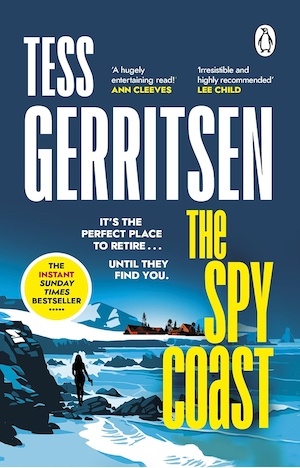
If you enjoy Mick Herron’s disgruntled spies, sardonic humour and characters who have rather more backstory than they let on, Tess Gerritsen’s Martini Club series should be on your reading list. It begins with The Spy Coast, which introduces Maggie Bird, a retired CIA operative who has swapped espionage for a quieter life in rural Maine… or so she thinks. Like Herron’s Slough House crew, Maggie and her fellow former spies may be out of the game, but they’re certainly not out of their depth. Gerritsen combines international espionage with a terrific ensemble cast, proving that experience can be an intelligence operative’s greatest weapon. It has been wonderful to see the author step from medical thrillers to mainstream spy novels.
Start with The Spy Coast
A Stranger in Corfu by Alex Preston
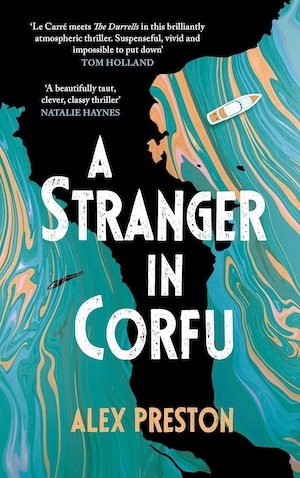
Imagine the British comedy show The Durrells with spies. This is part of the appeal for Alex Preston’s A Stranger in Corfu, which came out earlier in 2026. It feels a tad like if Slough House was more geriatric and shifted to Corfu. Nina, much like River Cartwright, doesn’t belong with the rest of the outcasts here. She’s younger, fresher and related to a service legend. Like those in Slough House, the old spooks here have been in the field and have now been hung out to dry by those in London. If not as abrasive or comedic as Herron’s work, there are obvious parallels to be drawn.
Start with A Stranger in Corfu
The Cormorant Trilogy by Michael Idov
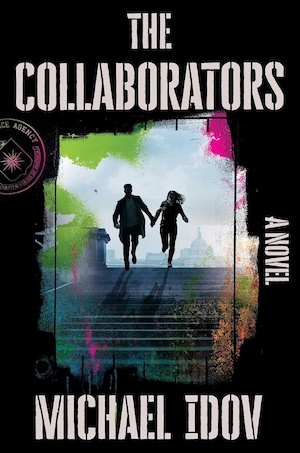
For Slow Horses readers who enjoy the series’ morally complicated spies, political intrigue and darkly funny take on the intelligence business, Michael Idov’s Ari Falk novels are well worth investigating. The Cormorant Trilogy starts with The Collaborators, which introduces Falk, a disillusioned CIA officer whose career has left him questioning both his profession and the machinery behind it. When an influential Russian vlogger is killed, Falk finds himself drawn into a conspiracy reaching deep into the worlds of American and Russian intelligence. Like Jackson Lamb and his team, Falk is far from the polished super-spy stereotype: he’s cynical, damaged and unpredictable, but his experience makes him extremely difficult to underestimate. Book two, The Cormorant Hunt, is due in March 2027.
Start with The Collaborators
Have we missed anything? If you’ve read a great spy novel that you think is akin to the Slough House books, tell us about it in the comments below.