

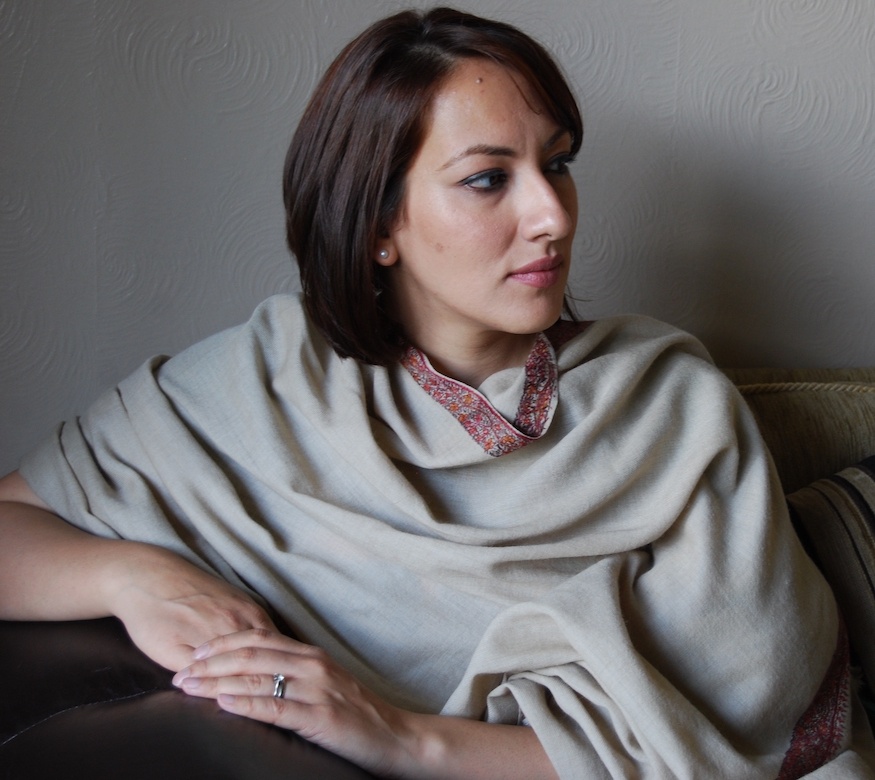
Saima Mir is a British crime author who offers readers something different and challenges perceptions. Get this – her trilogy featuring Jia Khan is antihero noir with a Muslim woman leading a crime syndicate. The idea of it immediately made me want to find out more, and so we invited Saima to join us here on Crime Fiction Lover.
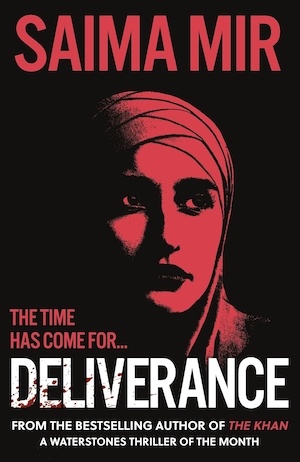
The third book in the series, Deliverance, arrives on 2 July 2026 and in it Jia aims to turn her criminal empire into a legitimate business. But, just like Michael Corleone all those years ago, her enemies won’t let her walk away. There will be blood.
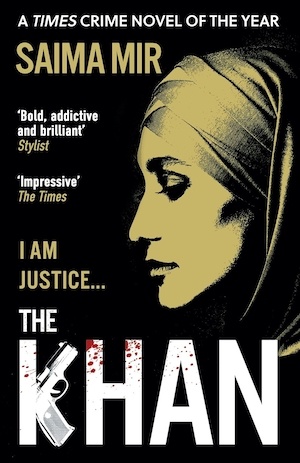
It follows on from the bestselling novels The Khan (2021) and Vengeance (2024), in which lawyer Jia takes over her father’s crime syndicate and then repels attacks against it to solidify her grip on power.
Born in London and raised in Bradford, Saima became a journalist on local newspapers before joining the BBC Look North team. During this time she covered many crime stories – some of which were never solved. The shooting of PC Sharon Beshenivsky in 2005 started her thinking about writing a crime novel. She has also written about motherhood and being a Muslim woman, for example in her essay in It’s Not About the Burqa.
What are crime fiction lovers going to love about Deliverance?
Deliverance expands the Khan empire globally, and there’s added intrigue, more crime, there’s a wedding, and a murder, and there is of course the commentary on what it is like to be a crime boss in a man’s world.
Who is Jia Khan? How did you conceive of this character and how have you developed her?
Jia Khan is a criminal barrister, and the daughter of a kingpin. She happens to be a British Pakistani woman, is smart, charming and hugely flawed. I developed her based on my experience of navigating various rooms, and situations, and coming to the realisation that women who shared her background were often represented as weak, characters who needed saving, but the women I knew were quite the opposite.
What is she up against in Deliverance?
In Deliverance, Jia is up against an international conglomerate of criminals who want to seek revenge for something that happened at the end of Vengeance. One of her men is murdered, and her driver blown up, which sends her organisation scrambling for answers.
The main bad guy is called Yanik Kaplan, and he is desperate to take her down and control her empire, but there are other players including the UK’s Prime Minister Oliver Blundell. The main conflict in my books is always between the society that we think exists, and what actually is being done by people in power.
I tend to write complicated plots that make readers feel smart, and also surprise them.
Tell us more about the setting in Northern England, its role in the story and what the atmosphere is like?
I grew up in the North of England and often describe the city where I lived as an aging duchess who has fallen on hard times. The city I write is a fictionalised version of the place where I grew up, that allows me to do bad things without damaging the reputation of the area. It’s picturesque, full of rolling hills and valleys, crammed with interesting characters, and the faded glamour of buildings that once housed the country’s elite, but no longer have the allure they once did.
The city is a place that has seen countless groups live, grow their fortunes, and leave. It is a melting pot of ideas and ambitions.
Who are some of the other interesting characters we’ll meet in Deliverance?
The newer characters in Deliverance are Yanik Kaplan, who is a seething crime boss who wants to take out Jia Khan and her Jirga, Oliver Blundell who is the British Prime Minister and is hoping to engage Jia Khan in helping him win the election.
Sakina, who is Jia’s righthand woman returns, and we see her relationship with Idris, Jia’s consigliere develop. Both of these characters are morally grey but wholly committed to Jia Khan, the family, and their cause.
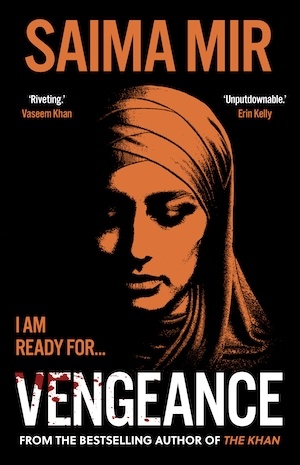
A muslim woman leading a crime syndicate – Jia is quite an unexpected protagonist in the genre. What has the response to Jia been like?
It’s been really well-received. I get the sense that audiences were hungry for a new kind of criminal boss, and a fresher representation of Muslim women. Everyone loves an antihero, and Jia has given readers insight into a world that they had not known previously.
Do we need to have read The Khan or Vengeance to enjoy Deliverance?
No, there is enough backstory in Deliverance to set it up alone.
What are some of the bigger themes you wanted to explore in the story?
I explore themes of motherhood, patriarchy and the establishments that hold power. I am fascinated by the idea of old money versus new money, the lines that people cross to survive, and the choices or lack of choices faced by people.
What crime books and/or authors have influenced you and what are you reading at the moment?
I read a lot of Stephen King growing up, and I’m a fan of Chris Whitaker, Nadine Matheson and Kia Abdullah. I am reading Kin by Tayari Jones.
Deliverance goes on sale 2 July 2026. Order your copy using the buttons below.