

Len Deighton was a writer who, alongside the likes of John le Carré, helped redefine the British spy novel in the 1960s and beyond. The Ipcress File and its nameless protagonist the basis for an era defining film with Michael Caine. le Carré died in 2020 and now Deighton has left us. While his last fiction novel was published in 1996, his legacy hasn’t waned, with a new interpretation of The Ipcress File produced for ITV in 2022.
Deighton was more than simply an espionage novelist. He was a prolific illustrator, working on over 200 book covers, including for the first UK edition of Jack Kerouac’s seminal 1957 work, On the Road. Much of his illustration work was for advertising agencies, while he also had a stint as a flight attendant. He was commissioned to write a series of ‘cookstrips’ for The Daily Express. He also wrote the screenplay, although uncredited, for the Richard Attenborough film Oh What a Lovely War.
It was, however, as a spy novelist and author of historical and non-fiction that he would make his name, penning 27 novels.
The Ipcress File and its sequels dealt with Cold War tensions at their height. The stories entailed complex plots around atomic bombs, kidnapping, brainwashed scientists and more. The novels and films became highly successful, considered rivals to the Bond films.
His historical novels, like Bomber and his non-fiction work Fighter, which focused on the Battle of Britain, are considered among his best. His alternate history novel SS GB, published in 1978 and adapted into a successful BBC series in 2017, is one of his best-known standalone works – a speculative look at what Britain might look like had the Nazis won World War II.
Arguably, his finest work would be his trio of trilogies following Bernard Sampson, a jaded intelligence officer. Starting with Berlin Game in 1983 and finishing with Charity in 1996, we follow Sampson through the dying days of the Cold War as he uncovers secrets about his wife, Fiona (a fellow agent), and where her true allegiances lie. For a sprawling series of nine books, with an adjacent novel, Winter, which acts as a prequel of sorts, it is surprisingly intimate, with much of the focus on Sampson and his relationships. There is no shortage of tradecraft, yet Deighton keeps the tension high with twists aplenty.
One of the joys of the Sampson saga is how unreliable a narrator Sampson is, things seeming one way but in fact something else. This is the crux of Spy Sinker, which revisits the events of the first two trilogies from the eyes of those around him.
Deighton had a distinct, personable style. His characters felt real, but he could write a mean action sequence. His plots are layered but not quite as dense as le Carré’s or as far-fetched as Ian Fleming’s Bond novels.
With close to 30 books, it is of course a tough ask to pick the best of Len Deighton’s work, but here are five of his most important novels.
The Ipcress File (1962)

Deighton’s debut novel, it is a complex spy novel that introduces us to his nameless protagonist. The lead character is cynical with a dry wit, a far cry from the more glamorous spy characters of the early-mid 60s.
More cerebral than some of Deighton’s later work, it forces readers to keep guessing and following the twists and turns of a plot around brainwashed scientists. It may not have aged as well as some of Deighton’s later work, but it is certainly one of his most important novels.
Buy now on Amazon
Berlin Game (1983)
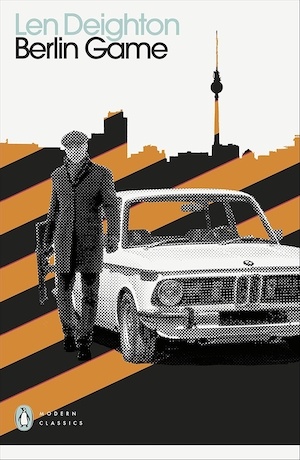
The first in the Game Set and Match trilogy and of nine books to feature lead Bernard Sampson. It has all the hallmarks of Deighton’s style, suspense, betrayal and personal stakes. It’s clear to see his evolution as a writer. The Berlin setting across these novels is full of paranoia, uncertainty and mistrust. The series may globetrot with Mexico featuring prominently in the follow-up, but Berlin remains a constant.
Buy now on Amazon
SS GB (1978)
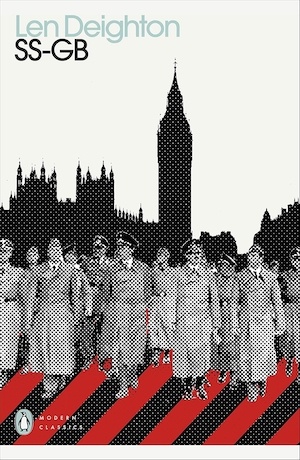
One of Deighton’s best-known standalone novels. Much like Philip K Dick’s Man in the High Castle, it paints a dark picture of a world where Britain and its allies lost to the Nazis. Many of its themes remain timely and even close to 50 years on it is one of the most recognisable of Deighton’s works, found widely in bookstores.
Buy now on Amazon
Bomber (1970)
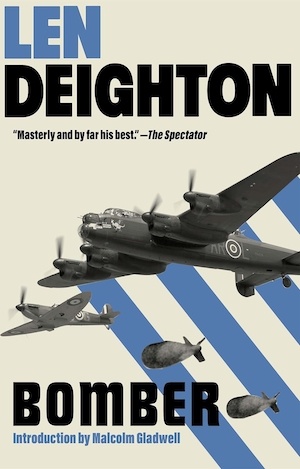
Away from his acclaimed spy novels, Deighton also penned several highly successful historical novels. Bomber showcases his meticulous attention to detail, charting a bombing raid during the World War II. Works like this, show his range as an author, something reflected in his background and interests.
Buy now on Amazon
Winter (1987)

A prequel, in essence, to the Sampson novel. Winter is a fictional account of a German family in the early years of the 20th Century. Spanning multiple generations and containing links subtle and more obvious to Deighton’s other novels. It is broader in scope and size than the Sampson novels. While fiction, it contains many real details and creates rich at times frightening world as the Nazis gain influence in Germany. Even read away from the other novels, this is a gripping, emotional tale.
Buy now on Amazon
Several of Deighton’s lesser known works – Only When I Larf, Close-Up and City of Gold – are being reissued on the 31 March 2026 by Atlantic Crime.