


Abir Mukherjee is an author whose career we’ve followed for a long time here at Crime Fiction Lover – going back to 2014 when he won the Telegraph Harvill Secker Writing Prize. The piece he submitted became A Rising Man, the first novel in the Sam Wyndham and Surendranath Banerjee series. Set in 1920s Calcutta, four more books appeared featuring these fraught detectives working under the British Raj.
Last year, however, Abir took time out from the series and boy did it pay off. Hunted, set in contemporary America and centred on domestic terrorism and the country’s divisive politics. This blockbuster thriller won the Theakston Old Peculier Crime Novel of the Year and British Book Award Crime Thriller of the Year awards.
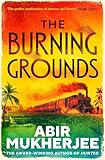
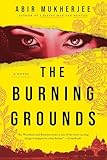
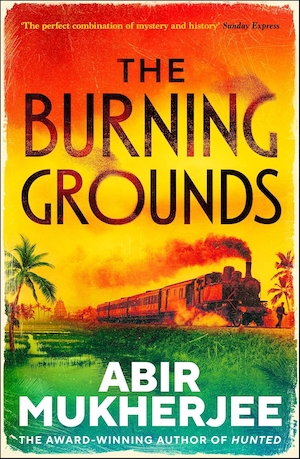
Now, it’s time for a return to Calcutta with The Burning Grounds, the sixth Wyndham and Banerjee novel, and one that shows us a slightly more glamorous side to the city. It begins, as always, with a body, but its location is unusual, and brings together two former colleagues who no longer see eye to eye. We had to find out more, so we invited Abir to join us here on the site.
What are crime fiction lovers going to love about The Burning Grounds?
Hopefully everything! The return of two characters who’ve been ten years in the making now, with a couple of mysteries to solve which blend fact and fiction; the city of Calcutta in all its dark glory; and a touch of silver screen glamour. Of all the Wyndham books, this, I hope is the best so far.
How has Sam Wyndham developed as a character in recent novels, and where’s he at now?
Good question. Sam’s an interesting fellow. He’s always been recalcitrant, and has probably grown more so over the years. He didn’t like coming to India – he only came because it was slightly preferable to suicide, but he’s made his peace with the place.
As for where he is now. If I’m being unkind, I’d say he’s a miserable bugger. The good news is he’s still free of opium, but his career and his love life haven’t been exactly smooth sailing. Ever since he helped Suren leave India, he’s been ostracised at work and seen as being too close to the natives to trust. Annie Grant, the second love of his life, has left him, and Suren hasn’t written to him in two-and-a-half years. To be honest, he’s damaged and he’s thinking of giving it all up and leaving India.
Tell us about Surendranath Banerjee as well. He’s been leading an interesting life and become quite a complex fellow, hasn’t he?
Suren started life as a wide-eyed optimist. He was in awe of Sam, this ex-Scotland Yard detective, when he first arrived in town. Since then, the scales have well and truly dropped. This disillusionment has spread to his view of the British and the police force he works for. Over the years, he’s become more interested in the politics of independence, and when we last saw him, he was a fugitive fleeing India for France. He’s back now, not exactly out of choice, and not too happy to have to call on a favour from Sam. Let’s see what happens.
Local tradition – cremation by the river – plays a fascinating role in the opening of the novel. Tell us a little more about the inspiration behind what seems a perfect hook for the early chapters?
The book opens with a body found at the burning ghats – the cremation grounds – by the river in Calcutta. Nothing unusual in that, per se, but this one’s been murdered. I’ve been to the cremation grounds in the city a number of times, indeed, my own father’s funeral rites were carried out there. It’s a strange place, where the normal rules of Indian society don’t hold – where the Doms, a sub-caste of untouchables, and the only people allowed to handle the bodies and light the pyres, are effectively kings. I thought the juxtaposition was fascinating and decided to open the novel there.
What are Sam and Suren really up against?
Sam is charged, much to his surprise, with investigating the death of the body found at the burning grounds – a multi-millionaire Indian philanthropist. Suren, meanwhile is searching for his cousin, Dolly, India’s first female photographer, who has gone missing. The cases force the two men back together, though Sam is somewhat distracted by a woman who’s newly arrived in town. And is there a link between the cases? It’s a book about the abuse of power and privilege and about secrets that need to remain hidden, whatever the cost; the latter based on a true story.
What are some of the aspects of 1920s Calcutta we’ll get to explore, perhaps less seen in previous novels in the series?
We’ll get to see more of Indian, or rather Bengali, society of the time, Calcutta being the capital of Bengal. We’ll get an insight into the strictures and morals of bourgeois upper caste society and the hypocrisies surrounding it. We’ll also get a bit of a look at the criminal underbelly too.
And who are some of the interesting people we’ll meet?
We’ll meet the dead man’s ex-wife, son and secretary, some film crew, the mayor of Calcutta and his wife, and most importantly, a glamorous international film actress who seems to have a soft spot for our Sam.
What was it like returning to W&B after writing and enjoying astounding success with Hunted?
It was a joy! I’d spent three years writing Hunted, three years during which, Sam and Suren were waiting patiently for me to get back to writing their story. When I finally got back to them, it was like meeting up with old friends.
What are some of the bigger themes you wanted to explore in The Burning Grounds?
I wanted to examine, the relationship between the governing and the governed – especially the grey areas. The impact of wealth on the status quo. I also wanted to look at upper-caste Hindu Bengali society, which at the time, was a leading force for modernisation and radicalism in India, even though it was bound by its own rigid codes.
And finally, there’s the evolving relationship between Sam and Suren – and mirroring the changing relationship between the British and the Indians.
What’s next for you?
I’m just finishing my next novel, titled The Pinnacle, which is a tale of love and murder set in modern day Mumbai. I’ve had a blast writing it; so much so that I’m smiling even as I think about it now. The book is basically White Lotus meets White Tiger meets Only Murders in the Building, and it’s probably the funniest book I’ve written so far.
The Burning Grounds goes on sale 13 November 2025. Order your copy using the buttons below. Photos (c) Stuart Simpson.