

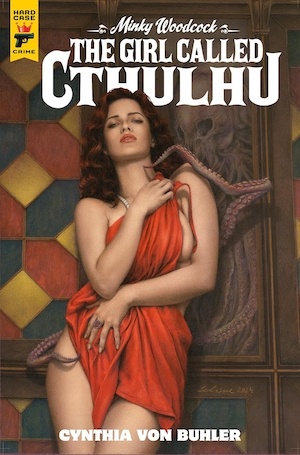
We don’t review many graphic novels on Crime Fiction Lover, but I wish we did. The artistry and imagination on display in books like Minky Woodcock: The Girl Called Cthulhu provides us with plenty of reasons to.
So, here’s the skinny… and there’s plenty of skin, believe me. Minky is New York a private eye, running her father’s detective agency in his absence. It’s the 1920s and Minky always manages to be at the heart of things. She’s worked an infidelity case commissioned by Harry Houdini’s wife (Minky Woodcock: The Girl Who Handcuffed Houdini) and she’s investigated whether Nicola Tesla has developed a death ray (Minky Woodcock: The Girl Who Electrified Tesla).
In her third case – The Girl Called Cthulhu – Minky’s hired by the occultist Aleister Crowley to exonerate him. One of Crowley’s disciples has died and the man’s wife has accused Crowley of murder. It’s all over the press. Crowley wants Minky to gain the woman’s trust and get her to confess to making false claims against him.
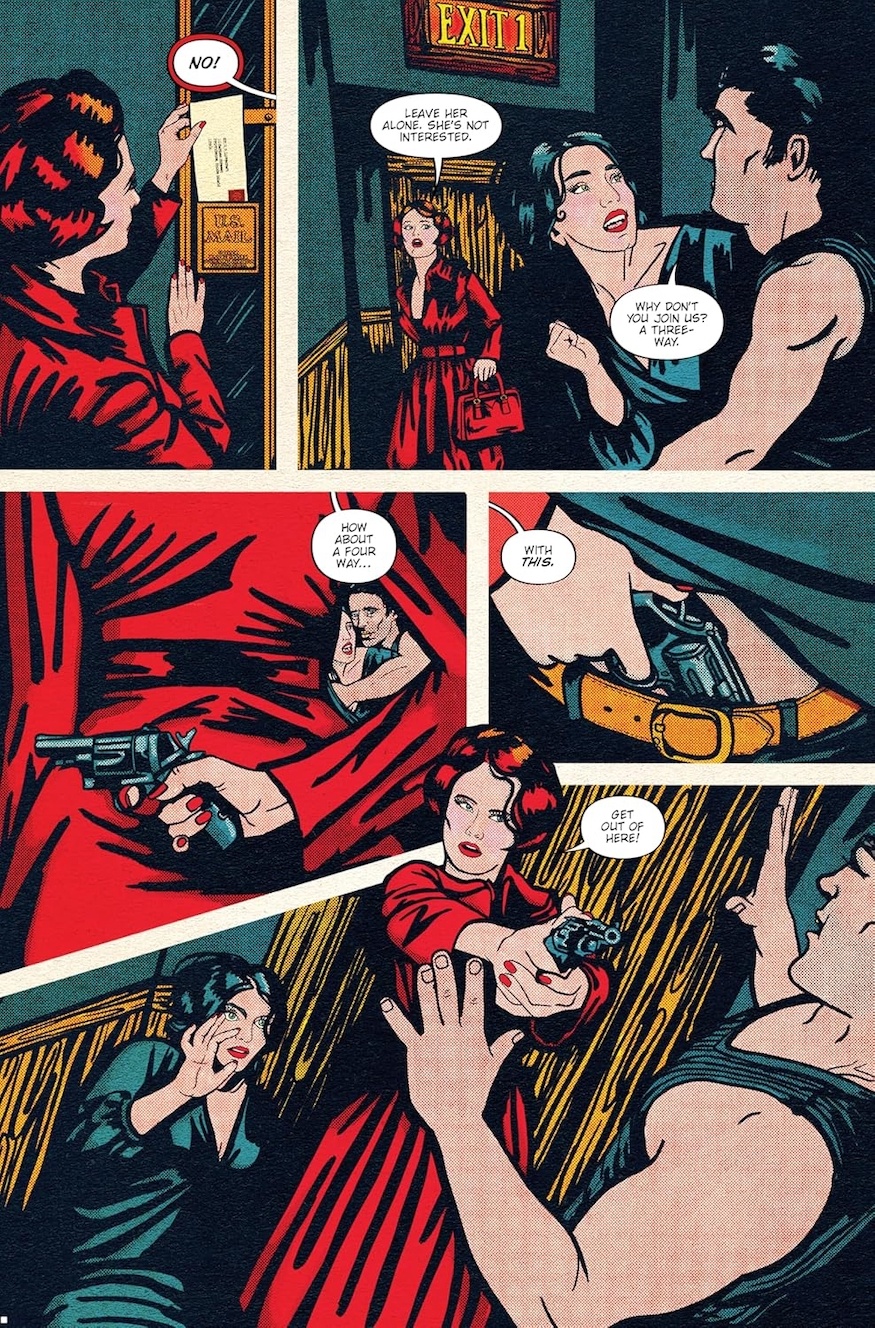
On the way, Minky helps a Welsh woman escape an assault. The woman has just arrived in New York, and the pair form a bond. They end up in a threesome smoking opium with the woman Minky is investigating, but their cover is blown and the woman, who’s in a tiger outfit, tries to kill them by setting the room on fire. Although she’s tied up, Minky manages to fling a burning bra onto the sprinkler system using her toe, thus putting out the fire. That’s just a taste of the daring, madcap action that’s to follow.
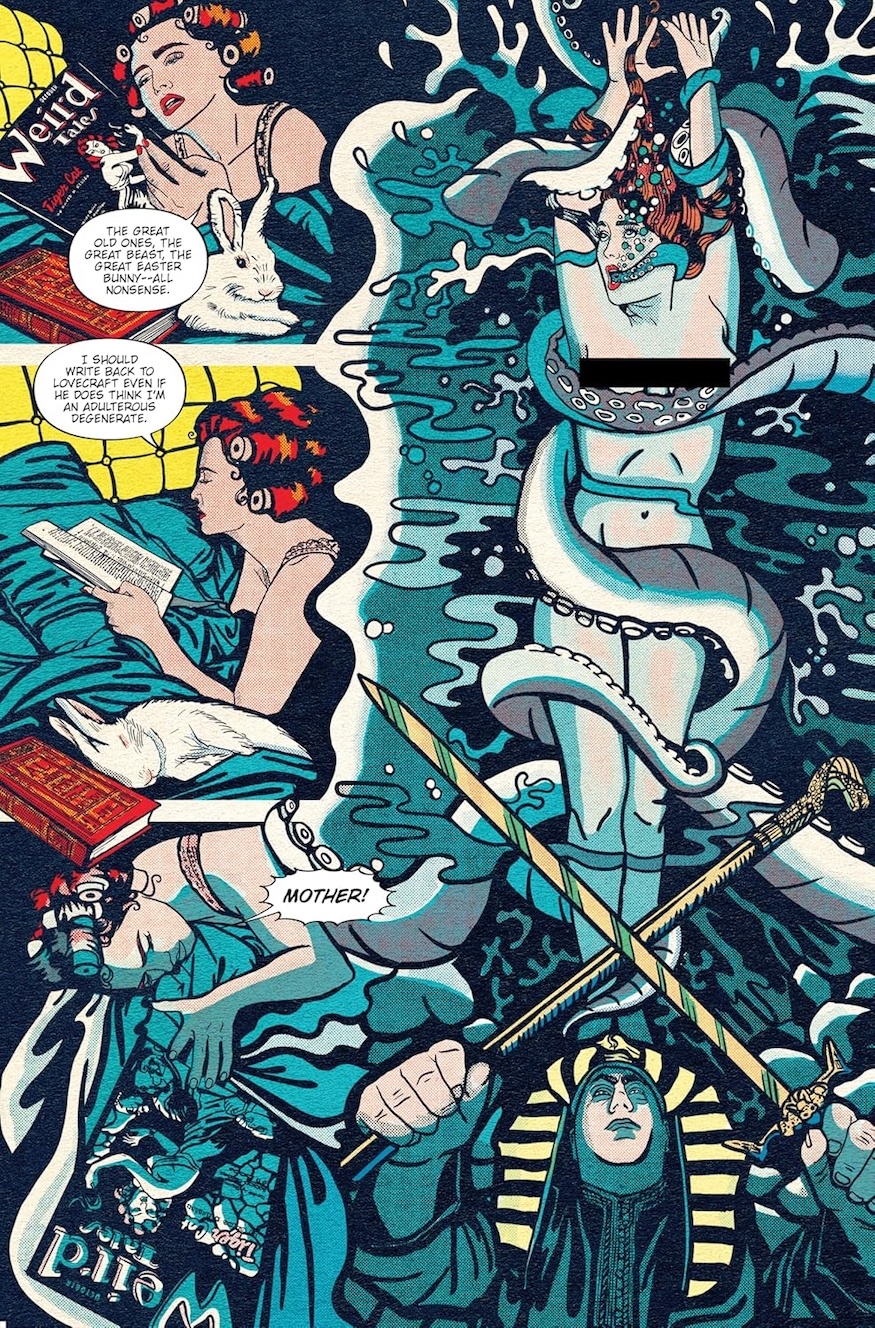
Via her surveillance of Harry Houdini, Minky has met HP Lovecraft. Lovecraft was helping the escapologist write a book debunking occult spiritualism. Since reading stories like The Call of Cthulhu written by Lovecraft, Minky has been plagued by nightmares and she has been exchanging letters with the author. Aleister Cowley lures Minky, her Welsh friend, Lovecraft and his wife to an island on the Hudson near Poughkeepsie. They’re drugged and we see the amazing spectacle of Crowley preparing to sacrifice them to some ancient horror of the type Lovecraft envisaged in his books.
The years pass and the story skips ahead, getting wilder and wilder as we go. The action shifts from New York to London to Spain and the Caribbean. By World War II, Minky accidentally involves herself in an espionage mission wherein British agents have stolen a dead body. Pulling the strings are secret agent Ian Fleming and Aleister Crowley is his unlikely accomplice. They’re using occult fortune telling to mess with the Nazis, there are submarines, explosions and daring escapes.
The story – originally published across four 32-page comic books – is extremely far fetched. Or so it seems. However, a thread of facts runs through it making everything Cynthia von Buhler has concocted plausible. The author reveals her research in a Q&A section at the conclusion of the story, and it’s just as compelling as the content of her graphic novel.
Watch our first look video for the graphic novel:
What we’ve outlined here is just a taste of what you can expect in Minky Woodcock: The Girl Called Cthulhu. Fast-paced, action-packed, idea-packed, wild, sensual – this graphic novel explores that period from the 1920s to the 1940s when superstition was giving way to science. Bizarre beliefs and strange imaginings rub up against both traditional mores and the new rationalism. Minky herself is a liberated woman, full of energy and the belief that she can do anything. She uses her brains and her body throughout the story.
The hardback – with beautiful end papers, a cover by the artist Celina and with Cynthia von Buhler’s own artwork throughout – is full of creativity. Half-tone textures and heavy line work mimic the printing techniques of the 1920s and 30s. Meanwhile, rich, warm colour palettes and low lighting dial up both the mystery and the burlesque aspects. What lurks in the shadows could be pleasure or it could be horror…
Titan Comics
Print/Kindle
£18.09
CFL Rating: 4 Stars

Here are a few sample images from the graphic novel.