

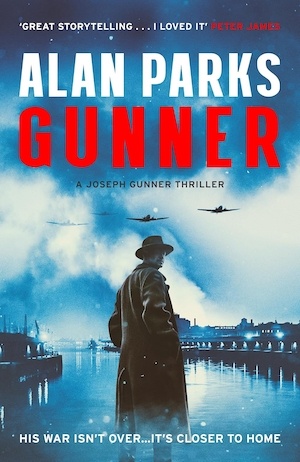
Gunner is the opener for a new detective series set during World War II. As such, it delves a little deeper into the past than the author’s award-winning Harry McCoy series, which so vividly recreates 1970s Glasgow.
It’s 1941 and former detective Joe Gunner is back in Glasgow, recovering from wounds sustained at Dunkirk while in the army. The big question in his life is how to cope with returning to civilian life.
One thing he hasn’t anticipated is going back to policing, but as soon as he arrives his old boss DI Drummond knows about it. Drummond meets Gunner off the train and takes him to a murder scene to get him intrigued in the case. Then he asks a favour of Gunner – just take a look at the autopsy and see what you think.
The man is unidentifiable. He was bludgeoned, his face caved in and his fingers severed. The only clue is his dental work. It’s clear the victim was German.
Gunner cannot resist. He agrees to do some basic work and begins with the local POW camp first, Patterson 16. The commander claims no prisoners are missing. Gunner is sceptical. Security does not seem very tight, the guards seem a little too blasé and something is not quite right, but whether that relates to his man is another question. Most of the camp are ‘white’ Germans, low- risk civilians. However, there is one hut where they house ‘black’ Germans, the Nazis and soldiers, before transferring them to more secure facilities.
Gunner would turn down the case that Drummond keeps pushing at him, bar for two things. One of Conn McGill’s boys was shot dead and the gangster’s rival Sellars is just out of Barlinnie. This would give him a chance to look into it. It could be trouble and Gunner is angry because he put Sellars away in 1939. A bent judge got him out. Also, his brother, a conscientious objector, appears to have done a runner and he needs to find him.
Gunner has already discovered his girlfriend Chrissy has left town so he finds temporary digs with the local Scots Greys Regiment. When he meets two guys who claim to be from the Ministry of Food, there to count sheep, Gunner is suspicious. Are they spies?
The scene is set: lost love; bitter gangland enemies; and the identity of the dead man is at the heart of a powerful conspiracy. It all makes for an intelligent and pacy crime thriller.
The setup draws you into the story from the beginning. Alan Parks appears to know Glasgow like the back of his hand and reading really feels like experiencing the wartime streets of a city under siege from bombers and suffering the deprivations of war. Joe Gunner is a solid new creation. He has his demons – the pain from his injuries means he has turned to morphine. So, flawed but likeable, he has a quiet wit and an instinct that pays off when he’s on the hunt.
The story was inspired by one of the most bizarre events of the War. The real-life case of Nazi minister Rudolph Hess, who feeling left out by Hitler, parachuted into Scotland in May, 1941, hoping to instigate a peace deal with the British. He wound up in the Tower and decades later died in Spandau Prison in Berlin.
Parks’s novel is full of interesting period details that flesh out the home front, not to mention a clever fictional plot woven from a glimpse of fact that keeps you on the edge of your seat. Gunner has beautifully spare prose and a noir-ish sensibility, and the suitably complex characters you need to carry that off.
I’m ready for more as this can only enhance the reputation of a writer already admired by readers and fellow authors alike. I think this could be a prize winner of the future too.
Also see Philip Kerr’s Bernie Gunther series.
Baskerville
Print/Kindle/iBook
£9.99
CFL Rating: 5 Stars