

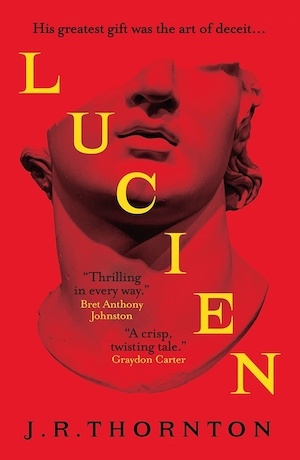
Christopher Novotny, the son of Czech immigrants, arrives at Harvard in the summer of 2010 with a bright future ahead of him. Despite being a child prodigy and talented artist, Chris is self-conscious and acutely aware of his working-class roots, a fish out of water at prestigious Harvard.
His roommate, Lucien Orsini-Conti, is Chris’ polar opposite. Charismatic, handsome, confident and, above all, rich. Lucien spent his childhood in elite boarding schools and claims to be from some European noble family, but of which country isn’t clear. He carries himself with an effortless belonging that everyone simply accepts.
When they first meet, Lucien decides that Chris’ name doesn’t suit him and insists on calling him Atlas because it sounds more intriguing and Chris looks like he’s carrying the weight of the world on his shoulders. Captivated and desperate to befriend the popular Lucien, Chris begins bending to his roommate’s every whim. But Lucien might not be all he seems.
Insecure, impressionable and quite naive, Chris has fallen for Lucien’s charms. He is swept up in a world of exclusive clubs and parties, even creating a confident alter ego at Lucien’s suggestion to overcome his shyness. His new lifestyle comes at a high price. To fund his social life and his tuition, Chris turns to a unique skill he honed under Marcus, his childhood mentor, who is now an art professor at Harvard. Chris is capable of painting just like great artists such as Monet and Camoin. Though he initially agrees to sell a fake just once to cover his fees, Lucien’s greed and erratic behaviour push things too far.
Chris idealises Lucien based entirely on his status. The novel explores class, the exclusivity of the Ivy League, and the snobbery of the art world, but it also serves as a warning about putting the wrong people on pedestals. Or trying to become someone you’re not. It reminds us that things are rarely what they seem, whether you are looking at a painting or a person.
In publishing, there is a trend of using comparisons to lure readers in and the latest crop of thrillers are likened to the likes of The White Lotus, Succession or The Talented Mr Ripley. The blurbs for most dark academia novels, meanwhile, mention Donna Tartt’s The Secret History. While this provides a frame of reference, it often sets an author up for a fall. After all, Tartt’s work was groundbreaking, and most successors pale in comparison.
Furthermore, if a book fails to deliver on the promises of such comparisons, readers are bound to be disappointed. For instance, the blurb for Lucien compares it to The Talented Mr Ripley, yet the only real similarity is the dynamic between two men from different social classes, one of whom is desperate to impress the other. Beyond that the comparison falls flat.
Ultimately, it comes down to personal preference. If you enjoy dark academia but prefer a shade of grey over pitch black, this is for you. Lucien is more of a psychological mystery, focusing on white-collar crime rather than a trail of dead bodies.
Also see our write-up of The Talented Mr Ripley.
Harper Collins
Print/Kindle/iBook
£9.19
CFL Rating: 3 Stars