

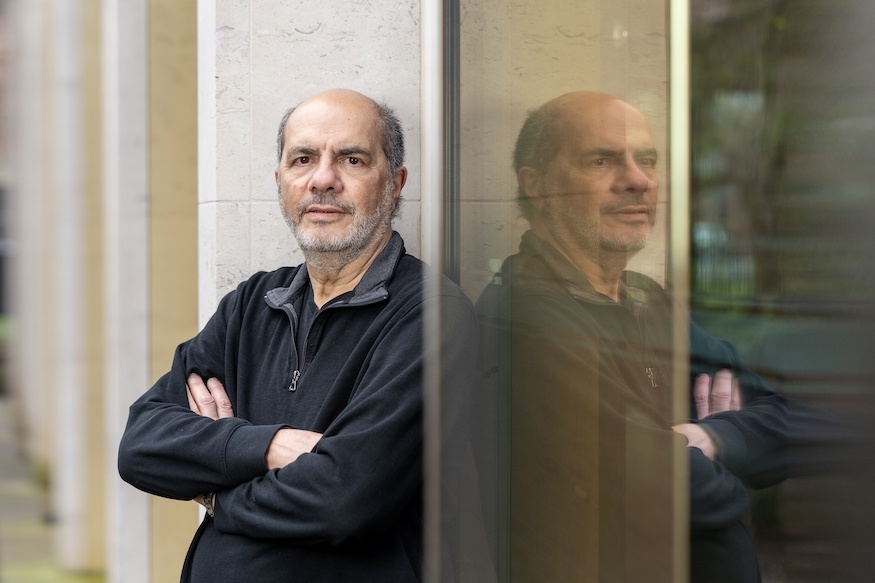
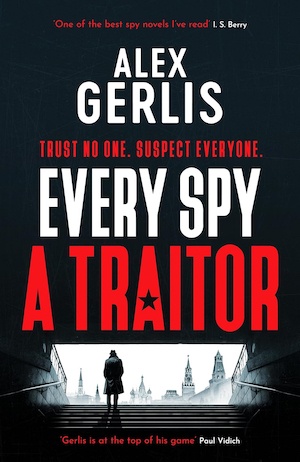
Over the last 15 years, Alex Gerlis has become something of a specialist when it comes to espionage novels set during World War II, and his writing is going from strength to strength. In 2024, he began an exciting new series with Every Spy a Traitor, which introduces Charles Cooper, a British agent hunting a Soviet spy nicknamed Archie. With the second in the series, The Second Traitor, now out as a paperback, we asked Alex to join us on the site.
Originally from Grimsby, Lincolnshire, Alex pursued a career on journalism with the BBC for three decades. Back in 1994, while covering the 50th anniversary of D-Day, an idea came to him. That grain of a story stayed with him until 2011, when he wrote The Best of Our Spies, and many more World War II espionage novels were to follow, all grounded in real history research by Alex himself. He’s here with us today reflecting on The Second Traitor and the Nazi plan to invade Britain, and the espionage surrounding it…
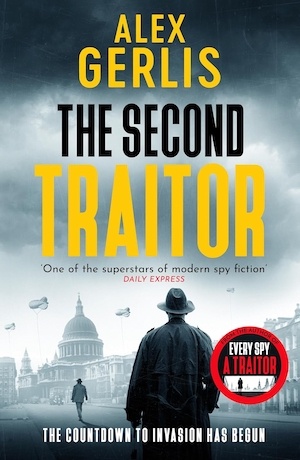
The paperback of The Second Traitor is just out. What are crime fiction lovers going to love about this book?
The Second Traitor is the second book in a series of four and the key plot – which runs throughout the series – is the identity of Archie, who is believed to be an MI6 officer working for the Soviet Union. There are a number of red herrings to keep the reader guessing. The book is set against the Nazi plans to invade Great Britain – Operation Sea Lion.
Who is Charles Cooper, what inspired this character and how have you developed him?
Cooper was originally conceived as the star of the series, the main character if you like. I think that during the first book, Every Spy a Traitor, and certainly in The Second Traitor, Archie developed into a more sinister character, so in that sense he and Cooper compete for the leading role. Cooper is an innocent type, recruited into Soviet intelligence much against his will and when he realised what had happened was utterly appalled and since then – 1937 – has done his very best to have nothing to do with them. Once he’s recruited into British intelligence, he actually becomes very good at it and becomes one of the main people hunting Archie while at the same time trying to conceal his own secrets.
What is Cooper up against in The Second Traitor?
Quite a range of people – the Nazis, a sinister organisation called The Group who are Nazi collaborators with links to the IRA and possibly the British establishment too, something he’s not really a part of.
Who are some of the other interesting characters we’ll meet as we read?
Apart from the above, I quite liked Günter König who runs the Abwehr – German intelligence – operation in Hamburg. This was the body responsible for organising espionage in the United Kingdom in preparation for the German invasion. And there’s a character called Joe Gallagher who’s a senior member of the IRA, sent to Hamburg to be trained as a German spy.
This was a very dicey time not just during the War but in British history generally. Perhaps maybe we forget Britain’s own existential struggle was going on at this point. Is that something you were conscious of while writing this book? How have you brought it home to readers, through the atmosphere for example, and do you think it resonates with anything going on at the moment?
That’s a good point because I’m not sure people realise how close this country came to being invaded. Hitler was absolutely determined it would happen, despite the caution shown by his generals. The German navy – the Kriegsmarine – said an invasion could only happen if the threat of the RAF was significantly reduced. Hence the Battle of Britain and when that failed, from the German perspective, Operation Sea Lion had to be abandoned. But plans were quite advanced and the espionage operation was part of that, though the stream of Nazi spies sent over to the UK were almost without exception of very inferior quality.
In terms of whether the atmosphere and conditions in that period resonate in any way with current events… I don’t think so. There’s a lot of what I think is ill-informed talk about how we’re once again living through the 1930s and the 1940s. Although we do live in unstable and even dangerous times, I think anyone who thinks they’re like the 30s and the 40s doesn’t know much about the 30s and the 40s.
How did you research the novel and how much of a role does actual history play in your story?
History plays a massive role in all my books, though I’m avoid describing myself as a historian. Having said that, I do pride myself in researching the history very thoroughly and being as accurate as possible with all the historical detail. I don’t change dates and I don’t alter key events. I do think that sticking to the history opens up a lot of possibilities with the plot – that old saying, fact is stranger than fiction and with the Second World War that is unquestionably true. I do some original research – interviewing people from that era who experienced the events, for instance and I also visit research institutions. I visit all the key locations in m y stories – for The Second Traitor I visited Hamburg and Rotterdam.
What are some of the bigger themes you wanted to explore in The Second Traitor?
Bringing across the sense that a German invasion of Britain was a very real threat is an important theme but perhaps most importantly I’m interested in exploring the nature of treason and also the nature of espionage and those who practice it. I think it is too easy to view these matters as being either black or white, goodies or baddies, whereas I think treason is far more nuanced as indeed is the nature of people who become spies, some seeing it as a profession, other falling into it by accident, only realising when they’re spies when it is perhaps too late to do much about it.
Why do you enjoy writing about the World War II era so much, because you have another series set during this period as well, don’t you?
Actually, The Second Traitor is my 13th novel and the 11th set exclusively set in the Second World War. The first in the series – Every Spy a Traitor – was set in Europe and the Soviet Union leading up to the War and my fourth novel – Berlin Spies – was Second World War plus Cold War. I think it’s because the War is a subject which fascinates me and I do feel a personal connection with it. I think there is easily enough scope in the War for at least another dozen novels. I can’t see me running out of ideas.
What some of the espionage books and/or authors that have inspired or influenced you, and why?
I can trace this back to sometime in the 1960s when I was given a copy of The Spycatcher Omnibus by Oreste Pinto, a Dutch counter-intelligence officer who worked in London for MI5 during the War. I was completely gripped by the book, which was first published in 1962, and it certainly sparked my interest in the subject. I’m a big fan of Graham Greene and John le Carre but specifically in my genre I feel all the novels by Alan Furst have been inspirational.
The next in the series comes out in the summer. Can you give us a little taster of what to expect?
City of Traitors is published in August and the final book in the series – title currently under discussion – is out in August 2027. I’m currently writing it. City of Traitors follows Cooper and Archie in their careers in British intelligence during the War. The earlier part of the book takes place in the United States and in northern Italy and the second half of the book is set in Berlin – the eponymous city of traitors – as the War ends and after the liberation of the city. The reader is also introduced to a character I really like, Ilya Davidovich Dvorkin who is an NKVD resident in New York City before moving to Berlin in April 1945 and playing a key role thereafter.
The Second Traitor is out now in print and digitally. You can order a copy using our buttons below. Image credit: Stan Papior.