

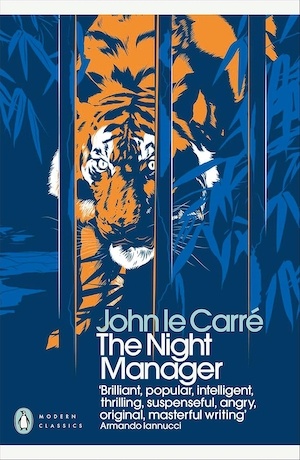
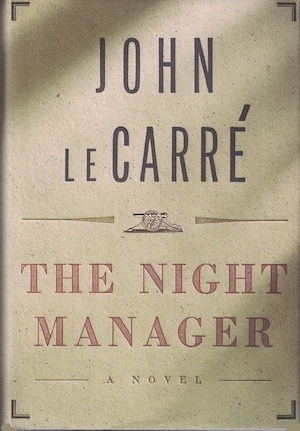
John le Carré needs no introduction at this point; his legacy is immortalised on both the page and screen. While his Smiley novels are staples the world over, from Call for the Dead to his re-introduction to the world of The Circus in 2017’s A Legacy of Spies, this series has come to define espionage fiction as we know it. Before the rapturous response to the BBC’s adaptation in 2016, few would have held The Night Manager in the same regard as the Smiley series. Indeed, outside of the hard-core fandom, many may not have been familiar with it at all. Yet it has become an important book, with Penguin reprinting the novel in its Modern Classics series.
Let’s go back to 1993 and the original novel. It takes place in a world a decade before the Iraq war, well before the war on terror, events Le Carré would dive into heavily in his later works. Here we are, just a few years after the fall of the Berlin Wall, the shadow of the Cold War looming large. The book and show do share much of the same DNA with the principal cast, but one of the main differences is a secondary plot focused on drug smuggling into South America, something explored more in the second series of the show. The ending of the show also diverges from the book.
A man on a mission
Jonathan Pine is the night manager of the title, working the witching hours in a hotel in Cairo, though the action later moves to Switzerland, the UK and several other locations. He’s a man wronged; someone close to him has been killed. The reasons why are what draw him into the world of espionage. Leaving behind the glitz and glamour of the hotel world and setting himself on a vengeance-filled collision course with Richard Onslow Roper, described at various points in the novel as “the worst person in the world”.
Pine, with the help of MI6’s Leonard Burr, who is swapped to Angela Burr in the TV series, infiltrates Roper’s organisation. With Roper associates in the upper echelons of the British intelligence service, bringing down the arms dealer is certainly no easy task. His mission needs to be more than covert.
Flawed, driven by a need for justice and without a background in intelligence, Pine is a far cry from the measured George Smiley. He is something of a loose cannon, trying to keep himself from being discovered. But like Smiley, he’s morally centred and operating in an amoral world. As with the show, we cut between the intelligence community’s efforts to find dirt on Roper and Pine’s own infiltration and kinship with Roper’s mistress, Jed. Both plots are gripping, with MI6’s efforts seemingly thwarted at every turn, such is Roper’s influence in The River House.
Post-Cold War espionage
One of the things that separates this from le Carré’s Cold War work is its look at ordinary people in addition to the intelligence apparatus. Tinker Tailor Soldier Spy never focused on anyone who wasn’t part of The Circus, but here Pine is somewhat of an everyman, which is part of both the book and the show’s appeal. We’re initially not sure if Pine is really seduced by Roper’s lifestyle and the glamour that comes with it, and just how bent he is on destroying him. This makes him an intriguing central character with flaws of his own.
The first season of the show is surprisingly faithful to the source text, updating Pine’s Egyptian experience to tie in to the Arab Spring and other modernisations here and there, but the characterisations and plot remain intact. The delightfully slimy Major Corkoran was brought to life deliciously by Tom Hollander. In the second season, Pine is wronged again when a colleague is murdered, and the trail leads to cartels in South America. Although part of the novel does take place in Panama, the show is not tracking le Carré’s story here.
If you’re put off by the size and intricacy of the Smiley novels, The Night Manager offers an entirely self-contained story that is easier to read than some of le Carré’s more dense work. It is under 500 pages in extent. The second season of the show retains some of the same characters but, unfortunately, due to the author’s death in 2020, is not based on an existing novel, making it a slightly different viewing experience arguably best judged on its own terms.
While some of the 21st-century Le Carré novels are far more divisive than his heyday, The Night Manager has stood the test of time and remains a thrilling book in its own right. It is a departure from his previous work, but in the best way possible, delivering one of his strongest post-Cold War works.
Also see our article on The Night Manager season two. If you haven’t read it, order yourself a copy below.